


Foster care is often misunderstood. Karina’s story shows how family love, community support, and lasting relationships can help children and parents heal, reconnect, and thrive.
By Georgia Boothe, Executive Vice President, and Rhonda Braxton, Vice President of Health & Wellness, Children’s Aid
When Karina Melendez was diagnosed with bone cancer at age 10, her mother did something she has never forgotten.
As chemotherapy caused Karina to lose her hair, her mother shaved her own head and made a promise: she would not let her hair grow back until her daughter's did.
Years later, Karina entered foster care.
Most people would assume those two facts cannot both be true.
Our popular understanding of foster care is often shaped by the most extreme stories. We imagine children removed from homes because of severe abuse, violence, or parents who simply do not care about their children. While those situations do exist, they are not the reality for many of the children and families involved in the child welfare system.
Karina's story reminds us of a truth that is often missing from public conversations about foster care: families can love one another deeply and still struggle. Many families simply buckle under the weight of illness, poverty, housing instability, and trauma that leaves them feeling overloaded without viable options for a remedy. That misunderstanding obscures one of the most important truths about foster care – and one of the most important lessons about the power of connection.
Foster Care Myth #1: Children Enter Foster Care Because They Are Unloved
Many people assume that foster care is primarily a response to abuse. In reality, neglect is the most common reason children enter foster care, accounting for nearly two thirds of foster care cases in New York City.
But even the word "neglect" can be misleading.
Too often, we hear the term and imagine indifference. Yet neglect is frequently intertwined with poverty and overwhelming hardship. A parent working multiple jobs may leave a child with a slightly older sibling because there is no affordable childcare. A family may miss medical appointments because they lack transportation. Housing instability, food insecurity, untreated mental health and substance abuse challenges, and economic stress can all contribute to situations that place children at risk.
That does not mean intervention is unnecessary. Children's safety must always come first.
But it does mean that families who become involved with the child welfare system are not defined by a lack of love. They are struggling to navigate challenges that would overwhelm many of us.
Karina's family experienced exactly that.
After years of intensive cancer treatment, the emotional and financial strain on her family became overwhelming. The family entered the shelter system. Her mother, who had devoted herself entirely to helping her daughter survive cancer, was struggling under extraordinary pressure.
Eventually, teachers noticed warning signs and made the difficult call that led to Karina entering foster care.
Reflecting on those years today, Karina does not define her mother by the crisis that brought her into care.
"I still think my mom is an amazing mom," she said. "People suffer and people struggle, and it doesn't mean that they are not good people or that they are not good parents."
That perspective challenges one of the most persistent myths about foster care. Children can enter foster care while still loving – and being loved by – their parents.
Foster Care Myth #2: Foster Care Is About Replacing Families
Another common misconception is that foster care exists to separate children from their parents permanently.
In reality, the primary goal of foster care is reunification. In fact, most children in foster care are reunited with their family.
That surprises many people.
The child welfare system is designed to provide temporary safety and stability while families address the circumstances that led to separation. Foster parents, case planners, therapists, healthcare providers, and child welfare professionals are often working toward the same objective: helping families heal and reunite whenever it is safe and possible to do so.
At Children's Aid, that means working not only with children and youth but also with parents, relatives, and other caregivers.
The goal is not to replace families.
The goal is to strengthen them.
Karina's experience reflects that reality. Although her relationship with her mother became strained after she entered foster care, the connection between them never disappeared.
Over time, both mother and daughter did the difficult work of healing. Through support, therapy, and growth, they rebuilt their relationship.
Today, Karina speaks about her mother not with resentment, but with compassion and understanding.
Their story serves as a reminder that foster care is not simply about protecting children. At its best, it is about preserving the relationships that matter most and creating pathways for families to reconnect.
Foster Care Myth #3: Resilience Is Something We Build Alone
Perhaps the most powerful lesson from Karina's story has nothing to do with foster care at all.
It has to do with resilience.
We often celebrate resilience as an individual trait. We admire people who overcome obstacles and persevere through hardship. But when Karina reflects on her journey – from cancer survivor to foster youth to first-generation college graduate – she sees something different.
As she completed her master's degree in social work, she began studying resilience more deeply.
What she learned surprised her.
"Resilience is relational," she said. "It's built through relationships."
That insight captures the power of connection.
Throughout Karina's life, there were people who stepped forward at critical moments.
There was the nurse who spent entire days coordinating and accompanying her to medical appointments and making a frightening experience feel manageable.
There were teachers who noticed when she was struggling and took action.
There were Children's Aid staff who helped her navigate foster care, education, healthcare, and independent living.
There was a therapist who challenged her to reconnect with the people who cared about her.
And there was Eva, a mentor who became family.
After a difficult period in college, Karina stopped answering calls and messages. For a year, she isolated herself, convinced she had disappointed everyone around her.
Finally, encouraged by her therapist, she picked up the phone.
She expected judgment.
Instead, Eva answered with five simple words:
"Come home. We miss you."
Those words changed the course of Karina's life.
She returned to school. She rebuilt her support system. She graduated from Columbia University. Today, she is completing a master's degree in social work and helping others navigate challenges similar to those she faced herself.
Her resilience did not emerge in isolation.
It was built through connection.
What Foster Care Teaches Us About Family Support and Community
Karina's story is deeply personal, but it also reflects broader realities facing families across our communities.
Every day, families are navigating rising housing costs, food insecurity, healthcare challenges, mental health concerns, substance abuse, childcare shortages, and economic uncertainty.
Too often, we frame these struggles as individual failures on the part of parents rather than a result of systematic inequality and poverty and the lack of will to collectively address the root causes.
But what if we viewed them differently?
What if we recognized that supporting families before they reach a crisis is one of the most effective ways to protect children?
What if we invest more deeply in the systems and services that help families stay together – affordable housing, healthcare, mental health services, childcare, educational opportunities, and community-based support?
What if we understood that investing in families, especially families with young children, from pregnancy to and through high school could drastically reduce the number of children and youth in the foster care system?
At Children's Aid, we believe every child deserves the opportunity to thrive. We also believe that children do not exist in isolation. They are connected to families, schools, neighborhoods, mentors, healthcare providers, and communities.
That belief is reflected in our work every day – and in our logo, which shows a child supported by family and community.
It is a simple idea: children do better when the people and systems around them are strong, steady, and connected.
That is why family support, community-based services, and trusted relationships are not extras. They are essential to helping children heal, grow, and thrive.
That is the real lesson of foster care: children and families need safety, stability, and connection.
The connection between parent and child, teacher and student, mentor and young person, community and family can help families weather hardship and help young people discover their strength.
For Karina, those connections made the difference between surviving and thriving. For every child and family, these relationships create the conditions for healing, growth, and hope.
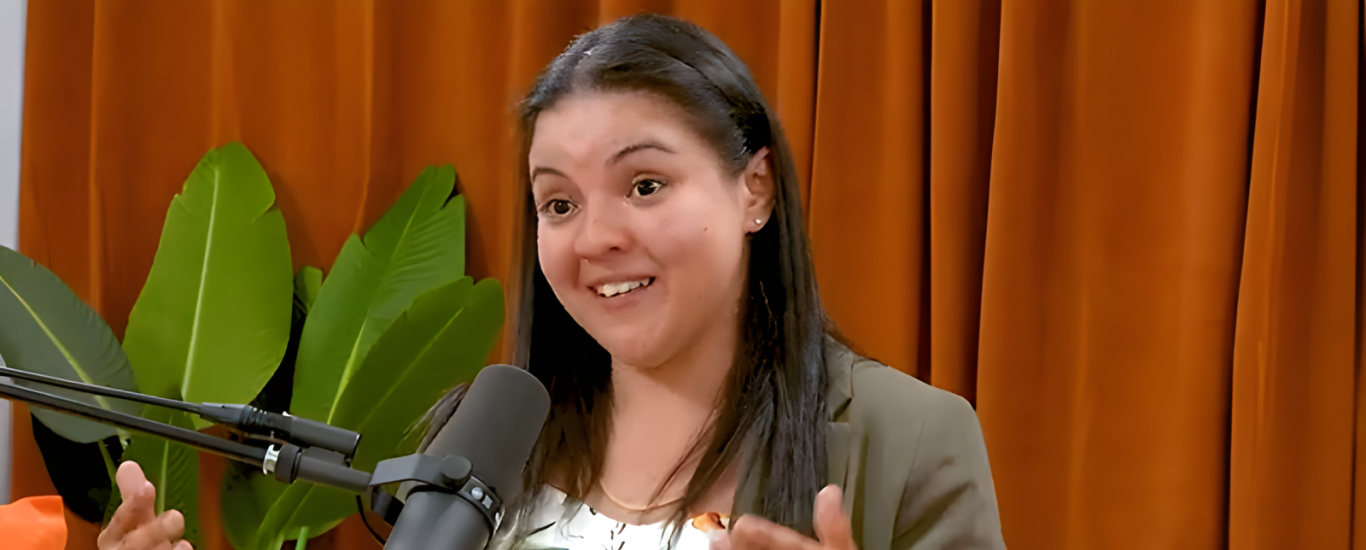
Karina Melendez is featured in Season 2 of “Every Step of the Way,” the Children’s Aid alumni podcast. Watch as she discusses her journey through foster care and how the right relationships allowed her to thrive.