Kimberly Mercedes (00:00)
That was really hard that night. Specifically, I remember breaking down in the bathroom, being like, “Why me? Why me?”. I already lost my father at seven years old when he was murdered, so losing my mom five years after that is hard.
Tauriyan Sparrow (00:15)
I did take time to grieve, but it was also a bit freeing. I felt like this was my opportunity to try to branch my wings off and fly. You know my last name is Sparrow, so I'm just trying to take flight.
Brenda Triplett (00:28)
Correct me if I'm wrong, but did you graduate from high school with a 3.9 GPA?
Kimberly Mercedes (00:33)
Honestly, I know I deserve the fruits of my labor, so I put in as much work as possible into doing the best I can, and that's a lot of where my resilience comes from, just knowing that I deserve the best for myself, so I have to do the best for myself.
Tauriyan Sparrow (00:48)
My father believed not in homeschooling but unschooling. So I learned based on the environment that's around me. So if I see a cloud that looks different, I would just look it up on Google, and that was pretty much my education.
Rodney Lee (00:59)
What was it like for you?
Tauriyan Sparrow (01:01)
Therapy definitely helped me realize I have a sense of self.
Brenda Triplett (01:05)
What really matters are the resources and the people that are in their lives that step in to help, support them, that help to provide the opportunities and to let them see what's possible.
Kimberly Mercedes (01:19)
I want to get my LCSW, which is a licensed clinical social worker, and I want to do therapy. I would say you have to invest in yourself. You have to believe that one day that investment and that work will pay off.
Brenda Triplett (01:34)
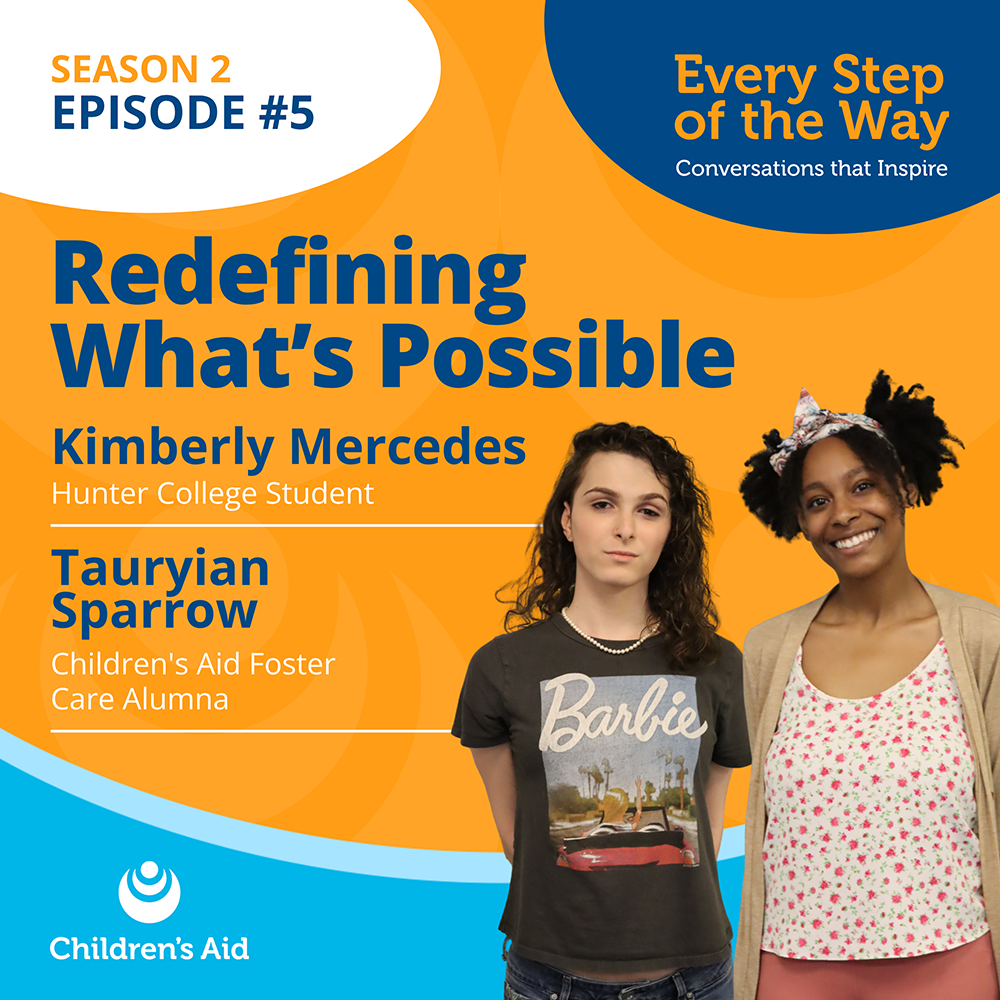
Welcome to Every Step of the Way. My name is Brenda Triplett. I'm the educational director in the Child Welfare and Family Services Division.
Rodney Lee (01:42)
And I'm Rodney Lee. I'm the deputy division director in the Child Welfare and Family Services.
Brenda Triplett (01:47)
Today's episode focuses on the educational outcomes for youth in foster care. But what it's really about is the resilience, the amazing successes that our young people have in spite of all of the challenges that they confront.
Rodney Lee (02:06)
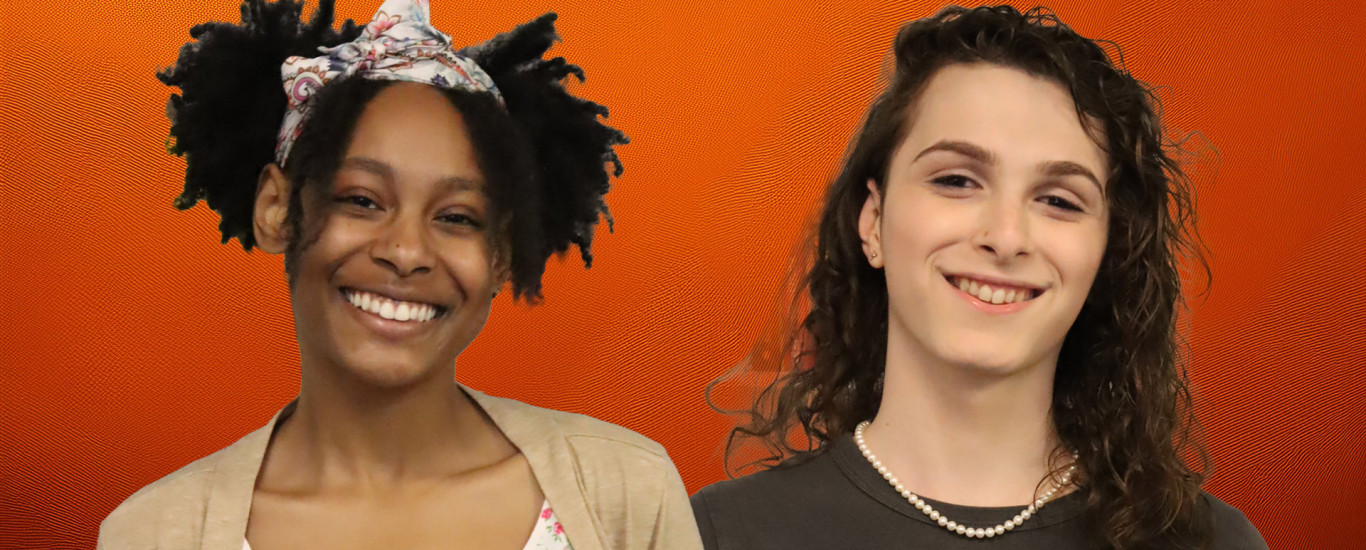
Today we're really blessed to have two remarkable young ladies, Kimberly Mercedes, who's at Hunter College pursuing a degree in psychology, and also Tauriyan Sparrow, who also has been remarkably resilient and has dealt with grief and challenges and found a way to lean into the supports that have helped to push her forward.
Brenda Triplett (02:29)
Kimberly, you get me, correct me if I'm wrong, but did you graduate from high school with a 3.9 GPA? You didn't just survive. What gave you the motivation to stick to staying on track and to be able to focus?
Kimberly Mercedes (02:47)
Yeah, so I knew from an early age that college was the way forward for me, and I knew to get into college and to get into a good college, I needed to do well in high school. So I mean, most days I came home and studied. If I wasn't studying, I was doing homework. Not to say that I wasn't also doing activities and hobbies, but I knew that I had to do the work. I had to put in the effort.
Brenda Triplett (03:10)
Can you describe some of the greatest challenges you've had?
Kimberly Mercedes (03:15)
Yeah, so for sure, being in foster care is not the only challenge I have. I am currently living on my own, as I mentioned; I've been doing that since I was eighteen. That in itself is a hard thing to do. I moved out the month I turned eighteen. It's a lot. I work as well at ACS as a college aide, so working, being a full-time student, living on my own, it's definitely a lot. But honestly, I know I deserve the fruits of my labor, so I put in as much work as possible into doing the best I can, and that's a lot of where my resilience comes from, just knowing that I deserve the best for myself, so I have to do the best for myself.
Rodney Lee (03:54)
And one of the things that I think about as I hear you speak is that foster care could be so unpredictable and uncertain. How did that affect you academically and emotionally?
Kimberly Mercedes (04:06)
Yeah, so foster care can definitely have its points where it's a little uncertain, but honestly, I've had an idea of what was going on. I always knew that I was going to have housing because of foster care and Children's Aid; they were always going to make sure my education was paid for.
Brenda Triplett (04:24)
So Kimberly, it's not just about the grades, and we're talking a lot about your grades, but it's also that the challenges are real. Mental health, housing stability, all of those other challenges that young people face. Can you discuss a little bit,, if you are willing to share, about maybe some of the other challenges that you might have had and how you've overcome them?
Kimberly Mercedes (04:44)
Yeah. For sure. Since I entered the system, I've been in therapy every week. I've had two sessions some weeks for a period of time just because of how bad my mental health was. I was diagnosed with depression as a teenager. A lot of that has to do with my gender dysphoria. I'm a transgender woman. Living in America, that can always be challenging, and having to kinda not deal with that totally by myself, but I didn't have the support system that maybe that I wish other children had in the same situation as me.
Rodney Lee (05:18)
Can you talk to me about the importance of having mentors and educational specialists and them helping to guide you to opportunities with education and what that's been like for you?
Kimberly Mercedes (05:30)
Yeah, and it was an educational advisor that recommended Hunter to me. Talked about its great social work program, its great academic reputation on a resume or grad school application overall. I ended up getting accepted into the scholars program there. I'm currently in the honors program there.
Rodney Lee (05:48)
Congratulations.
Kimberly Mercedes (05:49)
Thank you.
Rodney Lee (05:49)
Kimberly's an example of the amazing possibilities that young people can achieve if they have the right support, guidance, and resources. Can you tell me how it feels to get that support?
Kimberly Mercedes (06:05)
It feels great. I love where I'm at right now, and ultimately, if it wasn't for Children's Aid, foster care, and college choice, I would not be where I am right now. And although that's been a very hard journey, I'm not saying it has been easy. I am saying that I like where I am on the current day, right here in this room, and I like what my future looks like.
Brenda Triplett (06:25)
So Kimberly, there are a lot of young people who will probably view this podcast, and what advice would you give young folks in foster care who may be struggling with some of the same issues, and how do you… What kind of motivating advice can you give them?
Kimberly Mercedes (06:44)
Yeah, I would say you have to invest in yourself. You have to believe that one day that investment and that work will pay off, the same way I believed that getting a ninety-five on a test in tenth grade might not have meant the world at that moment. But it meant that in two years from now, when college applications were coming up, that my GPA was going to be high, I was going to be attractive to colleges, and therefore I was going to be able to get dorming and housing. And that was ultimately everything I ever wanted. So you have to put in that work. You have to believe.
Rodney Lee (07:15)
And so Tauriyan Sparrow is another remarkable young lady who has a very different story but has some of the same themes. The importance of being resilient, survival, and pushing through.
Brenda Triplett (07:31)
Tauriyan has been so confident and independent, and you have actually redefined what success means to you. Not what it means to other people, but what it means to you. Can you talk about that?
Tauriyan Sparrow (07:49)
Of course. So success for me is just being able to accomplish it could be something as minute as a little goal you had in mind, like learning how to knit. That might be small or something major, like just getting yourself out of a certain situation. So with me, I feel like this started around 2018. Prior to that, my father did pass away from cancer, and I was living with my stepmother and my three half-sisters. And things were okay, but then I realized my stepmother had other plans in mind for who I was to her. She wanted to morph me into this person that she already had in mind. There were a lot of strangers coming in and out of the house. There were a lot of threats that were being made to people not even related to us. So it was a life-or-death situation. And I realized if I just kept my mouth shut, a closed mouth doesn't get fed. If I kept my mouth shut, my sisters and I would stay in a horrible situation. So at some point I had to open up my mouth and express what was going on. And a week after that, I was out of that home, and I entered Children's Aid.
So when you met me, it was after I had transferred to a different high school. The first high school I was in, I spent most of my time just getting all of my regions. So for clarification, when I went back to school, I was 16, turning 17; I had zero credits, and I had no experience.
Brenda Triplett (09:16)
Why did you have zero credits?
Tauriyan Sparrow (09:17)
My father believed not in homeschooling but unschooling. So I learned based on the environment that's around me. So if I see a cloud that looks different, I would just look it up on Google, and that was pretty much my education. Any extracurricular activities were more like me going to the basketball program with my sisters, but I didn't really learn much. I had to teach myself everything. I taught myself algebra, all that other stuff.
Rodney Lee (09:38)
I want to step back a little bit because you said something that was very significant. You said your father had passed away. And if you could just tell me how things changed for you when your dad passed.
Tauriyan Sparrow (09:52)
As horrible as this may sound, I did take time to grieve, but it was also a bit freeing. As much as I love my father, I was always considered daddy's girl; the agenda my father had for me for my future was not the best. Although I was very upset, I felt like this was my opportunity to try to branch my wings off and fly. You know, my last name is Sparrow, so I'm just trying to take flight, have the little bird fly out of the nest, and do what I can do.
Rodney Lee (10:22)
It sounds like a lot happened at one time. You lost your dad, you went to school formally, you had to take responsibility for your siblings. How did you deal with that stress and mental health challenges, and what brought you to want help?
Tauriyan Sparrow (10:41)
The way I was able to, I guess, cope with my situation was photography. It was a nice deterrent for me. It was from thinking about all the bad stuff going on, just going out a little bit more, just trying to be one with my environment and one with nature. At some point, I realized it just wasn't enough. It was just a mask, just kind of hiding everything that was truly going on. Just taking pictures of something that looked beautiful. Because I know once I stepped inside my house, it was just not the best. Holes in the wall, getting yelled at. It was just not really pleasant.
Rodney Lee (11:20)
What was it like for you?
Tauriyan Sparrow (11:38)
At first, my parents, well, specifically my father, had this huge stigma about everything: that therapy wasn't really going to help me with my mental health. Everything was very parroted, robotic. For me, I kept that mentality because that's all I was surrounded by. But once I realized I was provided amazing advice, breathing techniques, everything I needed to do to not only process what was going on, but learn how to cope or move on from it, or just accept that yes, this did happen, but this does not affect who I am as a person. Therapy definitely helped me realize I have a sense of self.
Brenda Triplett (12:03)
Tauriyan, the first time I really heard your voice strongly was when you said you were in college and you said it's not for me right now and I'm not going to return to college. What gave you the courage to finally say, no, this is not the direction that I need to go in right now?
Tauriyan Sparrow (12:23)
The first thing was definitely feeling like I was holding up a spot for someone else. I could have used the resources. I did have help through College Choice at some point, but I did go through something traumatic while I was in college, and that was one of the main factors that kind of steered me away. I felt like I went from being mentally well to going kind of back to square one, feeling like I went from being homeschooled to going back to school. It was a very weird transition. So it was that fear of a new environment, going through a really tough situation, and also the fact that I still have that habit in me that because I was homeschooled, or as my father liked to say, because I was unschooled, it still kind of sits in the back of my head that maybe school might be too much for me, which I doubt. Not at all. I'm a very intelligent kid. But when you're out of school for a very important phase of your life between twelve and sixteen, that kind of changes your mind about a lot of things. And I feel like if I went back to school, especially with everything that was going on, I was just going to have really poor grades.
Brenda Triplett (13:37)
So where are you now?
Tauriyan Sparrow (13:38)
Right now, honestly, I want to go back to school pretty soon. I was looking into being a sterile processing technician; you clean a lot of surgical tools and stuff like that. That seems like my expertise. And right now, I am willing to do whatever it takes for me to get to that right now.
Brenda Triplett (13:55)
Where are you mentally? Where are you in terms of your space, how you feel about yourself moving through this space?
Tauriyan Sparrow (14:05)
I feel more free now. Foster care gave me that sense of freedom, but because you guys helped me move, excuse me, live independently, it's a weird freeing feeling. If you would have asked me years ago if I was going to be living on my own, I would have looked at you like, “Are you crazy? Not at all. I'm probably still going to be with my stepmother, or maybe I'll move in with my mom.”. But the fact that I'm kind of living on my own and I'm sustaining myself and I'm holding down two jobs. That's a lot.
Brenda Triplett (14:36)
Yeah, that is a lot.
Tauriyan Sparrow (14:37)
I'm doing good. Also, I will thank Children's Aid for that as well. I am a school stability case aide. I do help out youths that are in care with transportation. And I feel like because Children's Aid provided me with so much help, the least I can do is also give back.
Rodney Lee (14:52)
Can you tell me what it was like going from being very isolated and and not getting support and having to take care of your siblings and and having to transition into school and and to deal with all of that mental health things that you were experiencing to finally being in a place where people were checking on you and people were trying to support you and and people were giving you options and choices. Can you tell me what that transition was like for you?
Tauriyan Sparrow (15:21)
I was stubborn about that. Honestly, I was so used to just holding my own hand through everything. So whenever anyone said, ”Hey, I'm here to help you.” I was like, “What's the catch? Why do you wanna help me? What are your intentions with helping me?”. I always thought that there was a catch with anyone just trying to provide any type of resource for me. And it took a lot. It wasn't an easy transition, honestly, and I don't know exactly when I kinda just woke up and realized like, “You're being stubborn at the wrong people.”. The agencies are one of the main resources I have right now to sustain myself and everything, and I'm just kind of turning the other cheek. And having people that are patient with you as well made me realize, “Oh, I may have yelled at you; I apologize. It wasn't my intention.”. But the fact that you stood by my side, and you still asked, “Do you need any more help?”. And they followed through with helping me; that's when I realized, okay, I do have people who are here to assist me with open arms.
Rodney Lee (16:29)
Kimberly, you entered foster care at twelve years old after experiencing many losses. What do you remember about that?
Kimberly Mercedes (16:38)
I actually remember the night it happened. I remember everything about that night. I remember being at basketball practice and coming back and having my family kinda be like, “Your mom didn't call you, right? You haven't spoken to your mom today or anything.”. And kinda from that point on, I stayed with my aunt for the next couple of months, and I mean that was really hard. That night specifically, I remember breaking down in the bathroom, being like, “Why me? Why me?”. I already lost my father at seven years old when he was murdered. Losing my mom five years after that is hard. In addition to the loss of my parents, I also knew from a young age that I was transgender. I maybe didn't know that exact term, but I knew there was something definitely up from the age of seven, actually around that same age that my father passed away. I remember looking at a Disney princess outfit for the first time and being really envious of the woman wearing it. So dealing with that loss, dealing with kind of just the whole family dynamic of now having to shift houses, shift families, shift who I'm dealing with, I also knew that there was something going on gender wise. And that was probably almost harder than losing my parents and being in the foster care system because that is an every moment of every day thing. Whereas losing your dad, you can learn to deal with that over time. Losing your mom, you can learn to deal with that over time. But up until eighteen and starting hormone therapy, that was something that, every day I woke up and like I noticed the facial hair on my face. I noticed the way certain features stood out. And yeah, that was almost just as hard at that time period.
Brenda Triplett (18:15)
What kind of supports did you have, Kimberly, that helped you to come out?
Kimberly Mercedes (18:20)
So my grandmother was supportive. Actually, she has been by far the most supportive family figure. She brought me makeup for the first time.
Brenda Triplett (18:29)
Did she?
Kimberly Mercedes (18:29)
She brought me the first set of clothing. Yeah. And she still, to this day, I call her every night, and we talk, and I mean it's it's great having that.
Rodney Lee (18:37)
Kimberly, earlier you had mentioned that you're excited about your future. Could you elaborate on what your future looks like for you, or what do you want to see or do?
Kimberly Mercedes (18:47)
Yeah, for sure. So currently I'm a junior in undergrad, so I do plan on going to grad school. Possibly still Hunter. Making that decision in the next year, actually. But after grad school, I want to get my LCSW, which is a licensed clinical social worker, and I want to do therapy. I want to work with people who are late teens, early adults, people who are dealing with depression, dealing with mood disorders, possibly some personality disorders, but specifically I also want to specialize in gender dysphoria for gender dysphoria teens, young adults. That is something that is crucial to me. That's something that was a support system for me: therapy. Once again supported by Children's Aid, just saying. So yeah, definitely that's what I want to do with my life, at least academically. And then personally…
Brenda Triplett (19:32)
And you have the lived experiences. So what better counsellor, what better person to help guide other young people on the same pathway? How about you, Tauriyan? Where do you see yourself?
Tauriyan Sparrow (19:43)
I see myself working with animals, but just because it's a lot of work and it's not good for mental health, and the pay could be a little bit better, I still see myself in the medical field but working more with people. I feel like because I was given a lot of help, I feel like I should help others. I talk a lot, but because I'm still kind of introverted, I just want to help clean up the tools and everything. So hopefully within like the next six months to a year I can go back to classes for that.
Rodney Lee (20:21)
And I love the fact that despite everything that's happened, that you have such a beautiful spirit and a happiness, and I'm glad that you have been able to find yourself and push through all the things that people try to stop you from becoming.
Brenda Triplett (20:37)
So when you think back to when you first entered care, how scary that was. You remember that first afternoon, Kimberly, you shared with us. Since coming into care, especially with Children's Aid, at what point did you feel supported? Maybe I am here now in a safe place, and what did that support look like?
Tauriyan Sparrow (21:02)
For me, it was definitely you guys encouraging me, not encouraging me to go back to school, but allowing me to be able to go back to school. Not having an education, especially for the peak phase of my life, was very daunting because if I wanted to pursue going to college or anything above that, I'm just like, “How can I do this without a high school diploma? How can I just do anything at all?”. I don't know. I feel like I could have learned a lot more, and it felt like I was very far behind with where I needed to be. So once I went back to school, I was encouraged by a lot of the case planning team, especially you, Doctor Triplett, asking me if there were any resources that I needed. If I needed books, we have like a book bag drive; I was given a book bag with a few items and stuff like that. Anything to allow me to continue forward with my education, or if I needed a tutor, let me know that you guys were there for me to make sure I was able to at least get my high school diploma.
Brenda Triplett (22:09)
Did anyone ever feel like family? Was there anyone at Children's Aid?
Tauriyan Sparrow (22:14)
I call you Auntie Brenda.
Brenda Triplett (21:16)
You do.
Tauriyan Sparrow (22:17)
I call you Auntie Brenda. You're, I guess, uncles too and everything, but I had like a lot of aunties and stuff that I would like to say.
Kimberly Mercedes (22:24)
So when I first entered into the system, as I mentioned, I had that first night, but the process after that was I got assigned a caseworker who is actually still my caseworker to this day. She's been great. So yeah, just small things like that at first, because a lot of the help came when I was older, and I needed the actual agency to take that step from being dependent to independent. But even at first, just knowing they were there, knowing that I had their support. And also kinda their defense in a way to ensure nothing crazy happened because I had a caseworker who had to see me in two weeks.
Brenda Triplett (23:02)
Speaking from experience, I know how folks feel about you guys. They really, really do see you guys as extended family.
Rodney Lee (23:09)
Tauriyan, I see that you brought two items. Would you care to elaborate on why those things are important to you?
Tauriyan Sparrow (23:17)
Yeah. So the first one that I have is a little award. It's from my high school, Bronx Regional High School. It's the principal's honor roll for 2019. I was maintaining an average of my grades above ninety, 90.67. What's really special to me about this is one again, I look back on younger me who was unschooled, and I always thought, like, “Will I ever go back to school? Will I ever be able to get a diploma or anything for that sort?”. So the fact that I'm looking at a little honors reward in my hand means a lot because again, if it wasn't for Children's Aid, I wouldn't have seen myself inside of school at all. I don't know where I would be when it came to my education. And the fact that I was able to maintain good grades despite everything that was going on, despite me moving, whether it was home to home or whatever the case was, whatever situation I was going through outside of school, I didn't let it affect me when I stepped inside of school. And then the second thing I got is a certificate of achievement that was signed by Dr. Triplett. This certification is to honor my commitment to giving back to Children's Aid. It's special to me because I feel like the agency helped me through so much, and I feel like the least I can do is at least help back by giving back when it came to other youths in care. So I'm grateful to have this achievement as well.
Brenda Triplett (24:49)
I’m grateful for you.
Brenda Triplett (24:50)
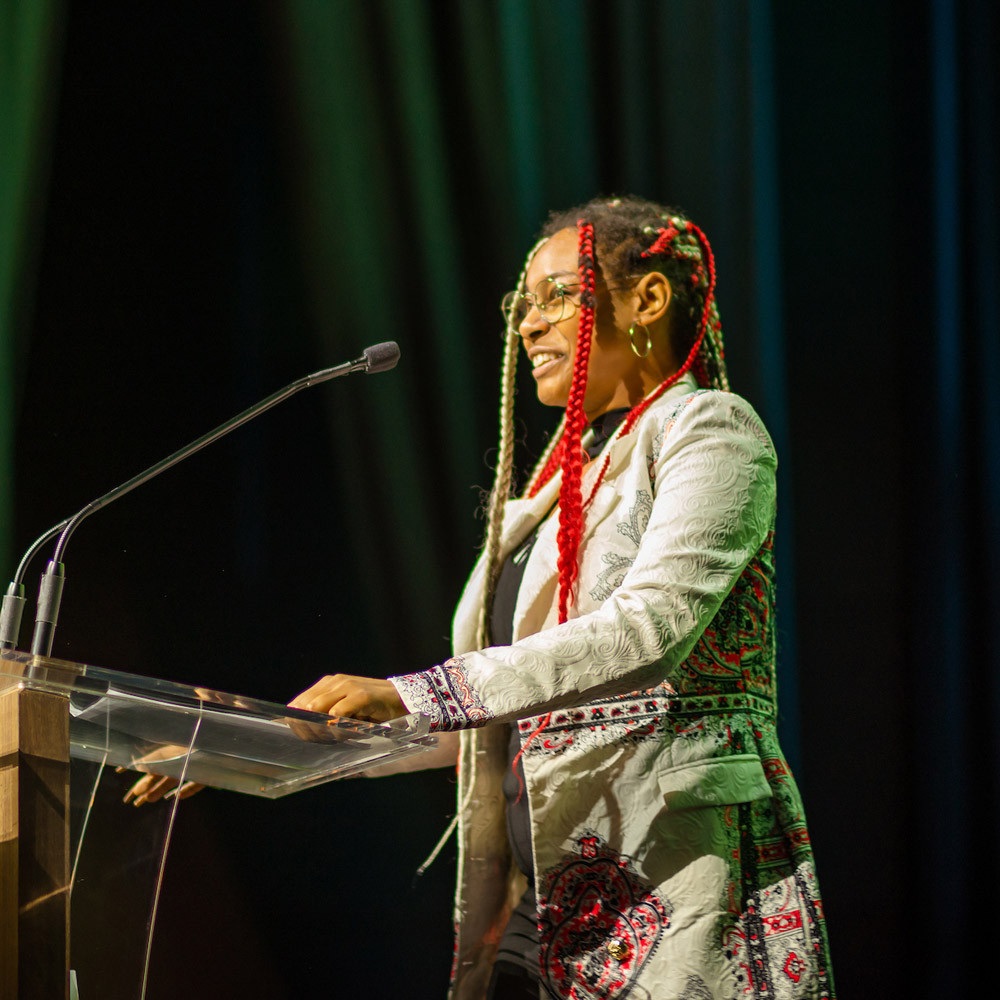
I wanted to show you. So I know you don't recognize this, or you might. This is your graduation when you got your diploma and I was able to speak at your at the at the ceremony at the NGC Center. I looked at your feet, and you were wearing these ruby red pumps that were awesome. And I looked at your feet, and I was just stunned, and I just kept taking pictures of your feet, and it reminded me of The Wizard of Oz. Dorothy, when the good witch says at the end, “Dorothy, you have the power all along, dear.”. It was just so apropos to your journey that you had that power, and you didn't always know it. I don't think you… As you said, you weren't always able to express what you felt was right for you.
Tauriyan Sparrow (25:45)
Yes.
Brenda Triplett (25:46)
And so this is very meaningful.
Kimberly Mercedes (25:49)
Well, I actually have my object on me. It's a ring. I have a little snake. And I chose a snake because it sheds its skin. It changes over time. And I think that's pretty similar to my journey of kind of not just changing, physically like a snake, but also just like personally coming from someone who was once a foster child who depended on the system to now being independent, living on my own. Changes. I like the changes in my life, and it's kinda reminiscent of like a snake growing up, shedding its skin, evolving.
Brenda Triplett (26:24)
So Rodney, what did you bring today to represent your connection to Children's Aid?
Rodney Lee (26:30)
I brought a Bible. And the reason why I brought the Bible is that life can be so challenging and unpredictable. I see it as a blueprint and as a guide to help me to keep getting better, being better, believing that hard times don't last forever and that night always gives way to day. And so the Bible helps me with my faith. We often hear that education is the pathway to opening doors for opportunities, but for children in foster care it's not quite that; they often have to deal with issues of poverty, housing, interrupted school, grief, trauma. So it's not as simple as we think it is.
Brenda Triplett (27:16)
No doubt, Rodney. And actually what really matters are the resources of the people that are in the lives that step in to help to support them, that help to provide the opportunities and to let them see what's possible.
Rodney Lee (27:34)
Thanks for listening to Every Step of the Way, the official Children's Aid Podcast. Subscribe so you don’t miss an episode. To learn more, visit https://www.childrensaidnyc.org/every-step-of-the-way-podcast.