Chanel (00:00)
In the bathroom, I'm crying, and I just refuse to come out. My after school teacher, she was on the other side of the door talking me through, and she's like, just come out, it's gonna be okay. I'm like, no, the costume is ruined. She was like, just wear the shoes that you have. I said, I can't wear them, they're Timberlands. I'm Cinderella. And she said to me, she's like, just be Cinderella from the hood. I, you know, wiped my tears. I walked out, I had the greatest fun.
Troy (00:26)
Both of my parents were part of Children's Aid. My mom actually worked under Dreema herself. The main reason why I was drawn to the school—Children's Aid was able to provide me all the knowledge that really piqued my interest.
Drema (00:39)
Cinderella to researcher. Given your story, what advice do you have for that next generation?
Chanel (00:48)
Be multipassionate and pursue your passions passionately. Whatever it is that gets you excited, that you look forward to, that makes your heart song sing, like do it.
Drema (01:00)
Community schools aren't just about education.
Abe (01:03)
They are about removing barriers to learning so all kids can learn and grow.
Drema (01:07)
And when you support the whole child, you open so many doors.
Abe (01:14)
Hi. Hi. How are you? Good to see you.
Chanel (01:16)
Hi, good to see you. Thank you so much for having me. It's such an absolute pleasure to be here. Thank you.
Abe (01:20)
Super excited about this.
Drema (01:24)
Welcome to Every Step of the Way. I'm Dreema Brown, head of school and one of the founders of Children's Aid College Prep Charter School, a K-8 Children's Aid community school in the South Bronx, serving approximately 600 students.
Abe (01:39)
And I'm Abe Fernandez, Director of the National Center for Community Schools at Children's Aid, which is a technical assistance provider that helps people all over the country to start up, scale up, and sustain community schools. We think that every school should be a community school.
Drema (01:56)
So today we're talking about a subject that you and I spend most of our time on. Absolutely. Community schools. Here at Children's Aid we see community schools as hubs of support and opportunity for the communities we serve. Maybe let's just talk a little bit about what that means for us.
Abe (02:13)
Yeah, I guess it makes sense to start talking about just what we mean by community school. And I think one way that I think about it is that, you know, schools can do a lot, but they cannot do it all. And I think the good news is they don't have to do it all by themselves. So part of what's at the heart of a community school is this idea of bringing the community together as partners to help figure out what it is that young people need and families need, and organizing all those resources together. How do you think about it?
Drema (02:39)
Well, as someone who's been a principal and head of school for many years here in New York, I think of it in the same way. I mean, I think I would describe it as a community school is a learning environment organized around the strengths and the needs of the children served and the communities we're in. So, you know, we like to talk about Children's Aid College Prep as a safe and engaging community.
Abe (03:05)
Absolutely. It's really thinking about the school as the hub of the community.
Drema (03:10)
And Chanel's story really brings that to life. So, welcome, Chanel. Hi.
Abe (03:15)
Chanel, we're so happy to have you here. Why don't you say a little bit about who you are and your connection to Children's Aid?
Chanel (03:21)
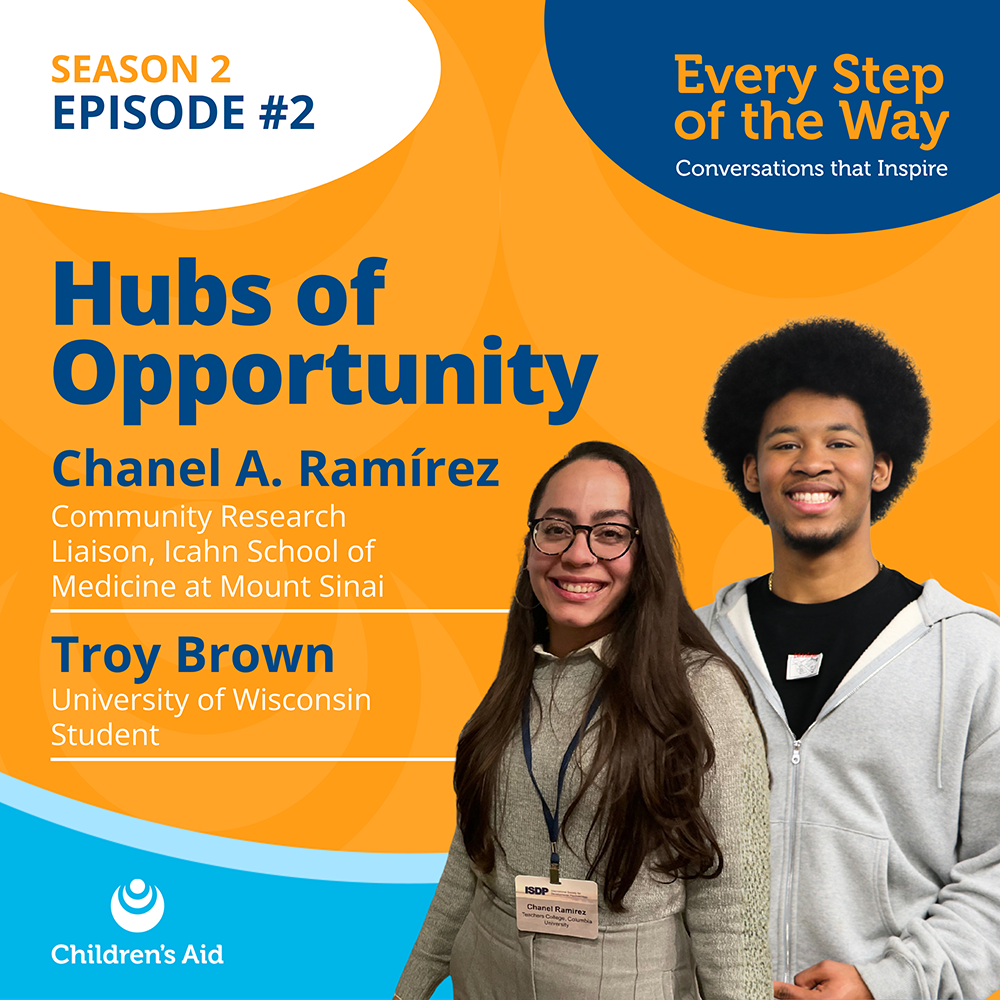
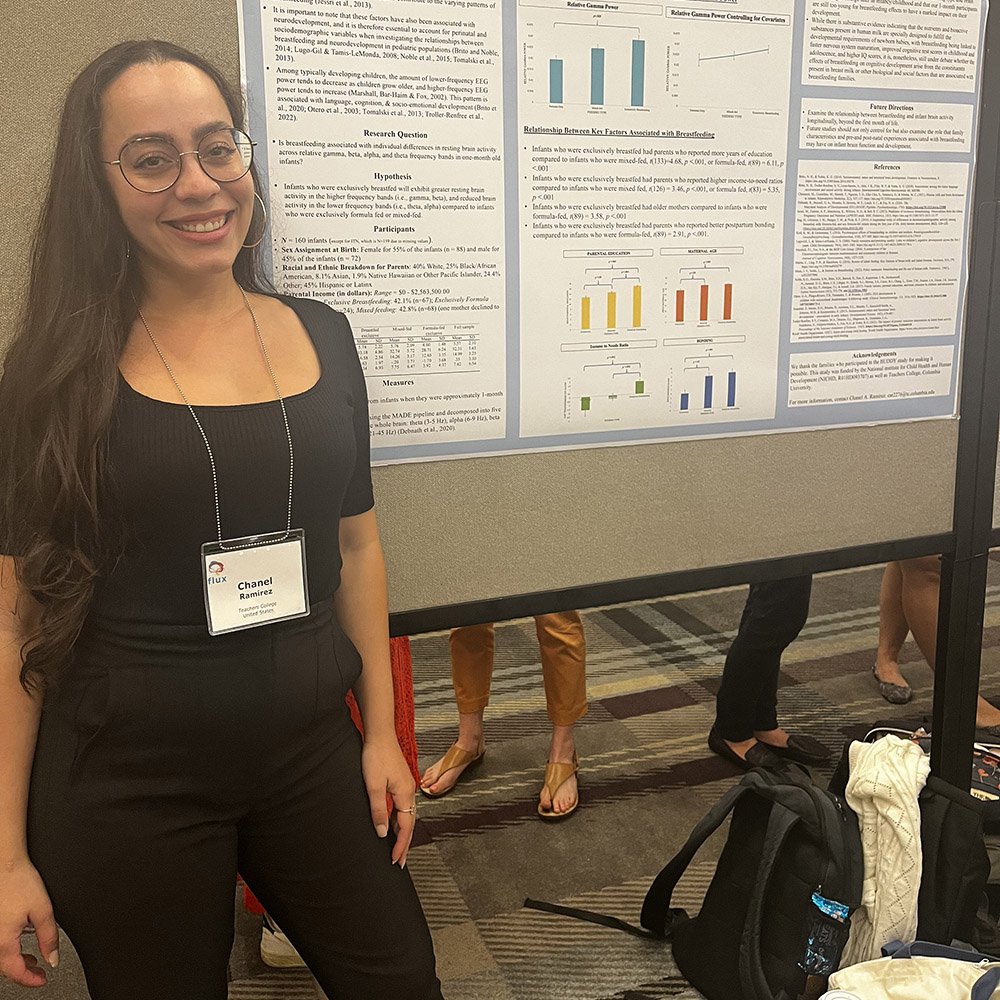
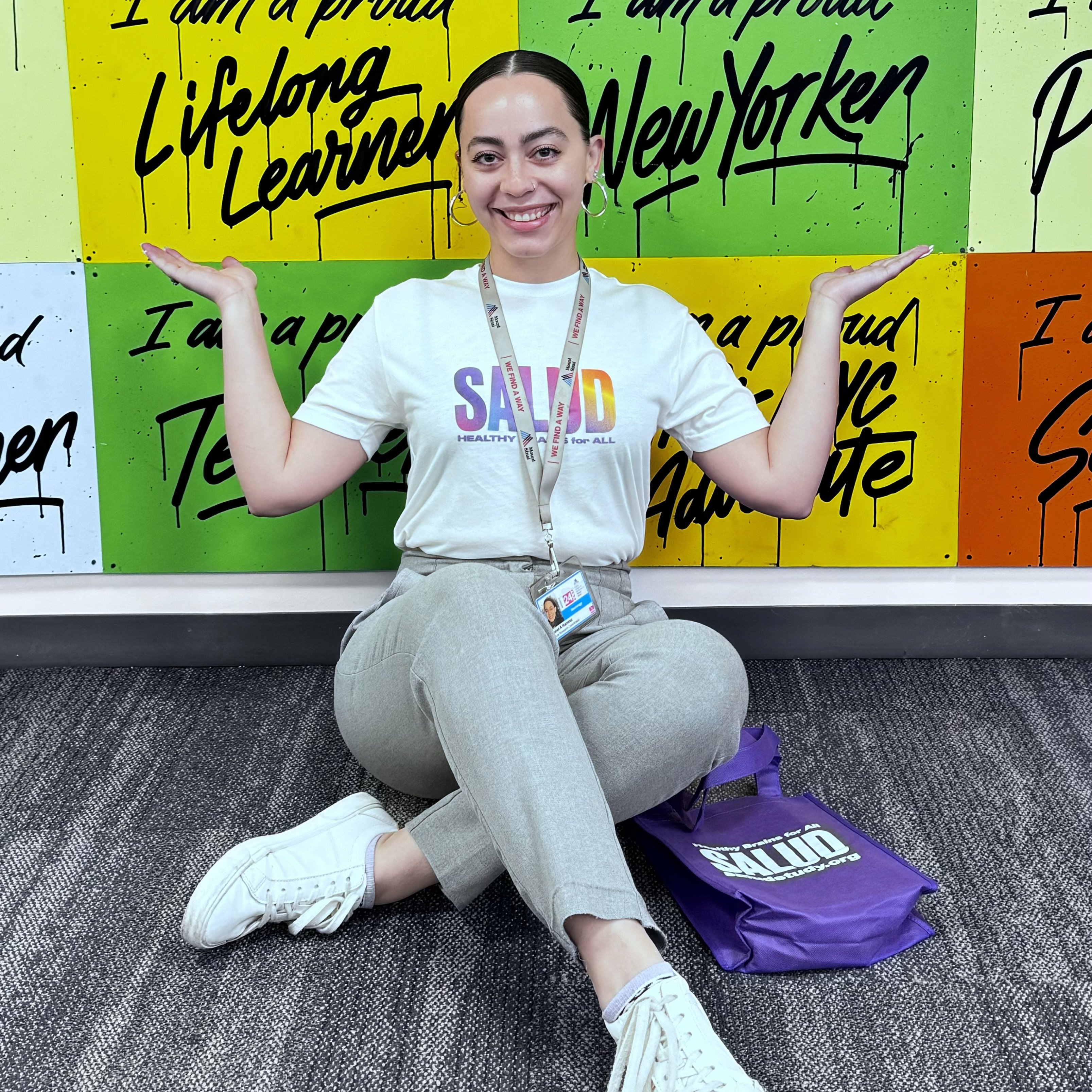
Yes. First, again, thank you so much for having me. It's truly a pleasure to be sitting here and talking about the really important impact and legacy of Children's Aid. I am a born and bred New Yorker from uptown, Dyckman—shout out Dyckman. Proud daughter of immigrants, first generation, proud dog mom to my dog, Sirius Black Ramirez. I started with Children's Aid as a student. My mom has been working for Children's Aid for almost 30 years. And so I was always in after school. My summers I spent at Wagon Road Summer Camp. When I was earning my bachelor's—I got my bachelor's in psychology from City College, CUNY—and at that time I was working in the after school program for Children's Aid and also as an academic facilitator in the summer camp as well. I worked with Children's Aid for a few years. It was incredible. And after, I went the healthcare route, I was doing clinical work, but I noticed that there's just a lot of disparities. And I'm doing my side research, I'm like, why are these things not talking to one another? Why is the world of research and the world of clinical practice, and what I'm seeing with my neighbors and my families—no one's talking to each other. And so I went back to school. I got my master's in neuroscience and education from Teachers College Columbia. And while there I did research studying neurodevelopment in children. Now I am a community research liaison studying dementia in underrepresented populations.
Drema (05:14)
What I love about your story is it is the story of what a community hub is, right? So you were there in school, you go on in your education beyond elementary school and manage to find your way back to work with young people in your community, and doing it in a way where you're understanding how the systems were at play and working together—or not—for the young people that you were working with. So as you think about all of the experiences you had at PS 5 specifically, and through all the Children's Aid programs that you experienced, what stands out to you the most as you look back now?
Chanel (05:55)
There's so many. Definitely as a kid, as a Children's Aid kid, after school was so much fun, and summer camp—I mean, that's where I learned how to swim. I rode a horse. I'm again from Dyckman; we're not riding horses casually, but you know, if you were a Children's Aid kid going to Wagon Road, you were. And so that definitely just really rich experiences. Now, as an adult, I'm thinking, I don't have any children, but like a traditional nine to five—school ends what, two, two thirty? So how are you going to pick up your children? Where are they gonna go? Can you bring your child to work? Most likely not. Creating these spaces for our children where they're safe, where they're being supported, where they're receiving homework help or receiving some kind of extracurricular, and for free, is so transformative for the families—how they would come running from work, or they would just be so grateful. It definitely just made you realize how important and instrumental the programs that Children's Aid provides are. I loved working with children. It gives you a reason to be silly, so it's such a fun space to be in. And seeing my students grow from the beginning of the school year in September to seeing them at the end of the school year in June—huge transformation, huge transformation. And I was working in an elementary school, so I was working with K through five, which is a lot of differences in development—five years all the way to ten years. But you get to see these moments where they're realizing the world around them, and they're making these connections, and it's so incredible to see. I for sure think that definitely impacted my own interests within research and psychology and brain development. I mean, of course, again, my mom has been working with Children's Aid for 30 years. I was a Children's Aid kid, my brothers were Children's Aid kids, my cousins, even my grandma—actually, I don't know the name of the program, this was again in the nineties, so years ago, but she was in some program with Children's Aid. I don't know what older adult program it was, but I remember she had this binder and I would just look through it. And there was this diagram of a body with the different systems. And, like, hello, the full thing—you have your after school, you have your summer camp, you have your school nurses, dentistry. I hope that you guys still have yoga. You used to, yes. So that was my favorite—being a staff member, I knew that it was for the students, but I was like, we're doing yoga together, we're doing Zumba. All this really rich programming and opportunities to explore, to learn, to be together—it's just really, really special.
Abe (09:08)
So Chanel, let's go back to—you were talking about being a student at PS 5, the Children's Aid community school. What do you remember the most? Is it a particular image? Is it a feeling you had there? Is it a particular person? What really has stayed with you since you were a student there?
Chanel (09:26)
A few, of course. Definitely, like I said, Wagon Road, running around in Chappaqua, New York, learning how to swim. The horses were incredible. I do have this core memory, which is one of my favorites. I was in after school. It was Halloween. I must have been—it might have been like first or second grade. I was Cinderella. Now again, this is the nineties, so in place of a glass slipper I had a little jelly sandal—it was clear with silver glitter. Either me or my mom, we forgot to pack my jellies. And so now the costume is ruined. I'm in the bathroom, I'm crying, and I just refuse to come out. And my after school teacher—her name, I don't remember her full name, I know her first name is either Vanessa or Veronica. Vanessa, Veronica, if this finds you, sorry that I'm not remembering the full name right now—but she was on the other side of the door talking me through, and she's like, just come on, it's gonna be okay. I'm like, no, the costume is ruined. And she was like, just wear the shoes that you have. I said, I can't wear them, they're Timberlands, I'm Cinderella. And she said to me, she's like, just be Cinderella from the hood. And I, you know, wiped my tears, I walked out, I had the greatest fun. I would tell everybody, they'd be like, look, Cinderella, and I would say, nope, it's Cinderella from the hood, you cannot tell me anything. And it's so funny and silly, but in that moment it was the biggest thing to me. It was just the biggest thing to a seven, eight year old to not have her full costume and just to have someone like
Drema (10:54)
Cinderella.
Chanel (11:12)
validate you but make it cool, and in a way that just made it so personable. Like, yeah, wear your Tim's and be Cinderella, and you're so fabulous and you're still a fairy princess, and go have fun. And it just stayed with me. And I don't think at that time that I would have realized it was gonna be that much of a core memory. But it is, and it's just—it makes me laugh every time I think about it.
Abe (11:38)
Mm-hmm.
Drema (11:39)
Yeah, so thank you, Chanel, for sharing those stories and those experiences. So Abe, you know, what do you think as you listen to her stories—what do you think makes a community school different?
Abe (11:52)
You know, I think what Chanel's story reminds us about community schools is that it is all about relationships. And we heard that powerful relationship that she had with the staff, with her family being engaged in the school as well. You know, I think part of what makes a community school a community school is this philosophy that first we should put kids at the center of the work. That's a really important way to think about how we want to move the strategy forward. But it's also thinking about how schools can be the centers of community. And if we think about all of the challenges that sometimes kids have to work through to be successful as young people, as students, as citizens, community schools help to bring all those partners together in relationship—to look at data together, to learn together, and to come up with solutions together. So I think we heard a lot of that connection that makes those solutions possible.
Drema (12:48)
You know, it got me thinking about how—you know, the Cinderella story is a beautiful story. At the same time, you know, there are lots of children who have different experiences going on. Maybe their mom doesn't also work in or near the school that they were attending in elementary school. And, you know, to Abe's point about community schools being a place where these resources can come together in support—I was thinking about something we talk a lot about in community schools: chronic absence. You know, when children miss a lot of school—in elementary school, usually there are reasons in the home or adult reasons that prevent them from getting to school, and as they get older, very often it could be some of the same things, but often tends to be disengagement from school for various reasons, right? So this idea of really coordinating those resources that help the adults understand why children aren't getting to school is what makes community school so powerful, potentially, right? There are children who don't get to school because they're between homes. There are children who don't get to school because they have one parent, and that one parent is ill and going through maybe cancer treatments, and being able to provide some links to community resources that help that family in that moment get that child to school—that's just one little example of how community schools can really help make that connection so that children and their families come first, and the realities of the community are addressed.
Abe (14:39)
It really is sort of thinking about the whole child, right? And understanding who young people are as students, as athletes, as artists, as leaders. So it's a pretty broad view of what schools can do. So how does that—when you hear us describing community schools that way, how does that touch down on your experience when you were at PS 5?
Chanel (14:59)
It became more apparent as a staff member—again, just seeing our students, but also building these relationships with the parents, and hearing from the parents, like how grateful they were, or them telling us, like, his little brother was sick all night, so I know that he didn't sleep last night, so if he's cranky or if he's tired, just to communicate and express that. I think that—and this is something that we practice in my current research lab, where we do community engaged research, and I see a lot of similarities with my role as a scientist and also the work that Children's Aid has done in that community engagement and in that relationship building. It's not just about making that connection, you know, it's not just about dropping your kid off and picking them up. How do we sustain and build these relationships so there's crosstalk amongst both of us, and so that we can build and support each other? For community schools, it's like, what are the barriers that are keeping you from coming to school? What is keeping you from getting your grades up? Is there something that you don't understand? Is there something that—maybe let's take you to the nurse, maybe you aren't feeling good, so you go to the nurse, or maybe you need glasses and they can do your vision exam. You know, the same, similar with research—like, what are these barriers that are keeping people in communities that are underrepresented and minoritized and marginalized groups from getting care, from getting quality education, getting quality health care, from being included in research studies about the brain and brain development. It's not just about getting that attendance—of course it's important, it's important to get your attendance, it's important for us, you know, on a research end, to meet our recruitment goals so we can check that off. But how do we do this meaningfully so that they feel included in the work, so that they know that this is a partnership and we're working together in the best interest of our community.
Abe (17:18)
So as you reflect on being a student at PS 5, as being on the staff at a Children's Aid community school—how did those experiences shape your career path, do you think? What opened up for you as a result of that?
Chanel (17:30)
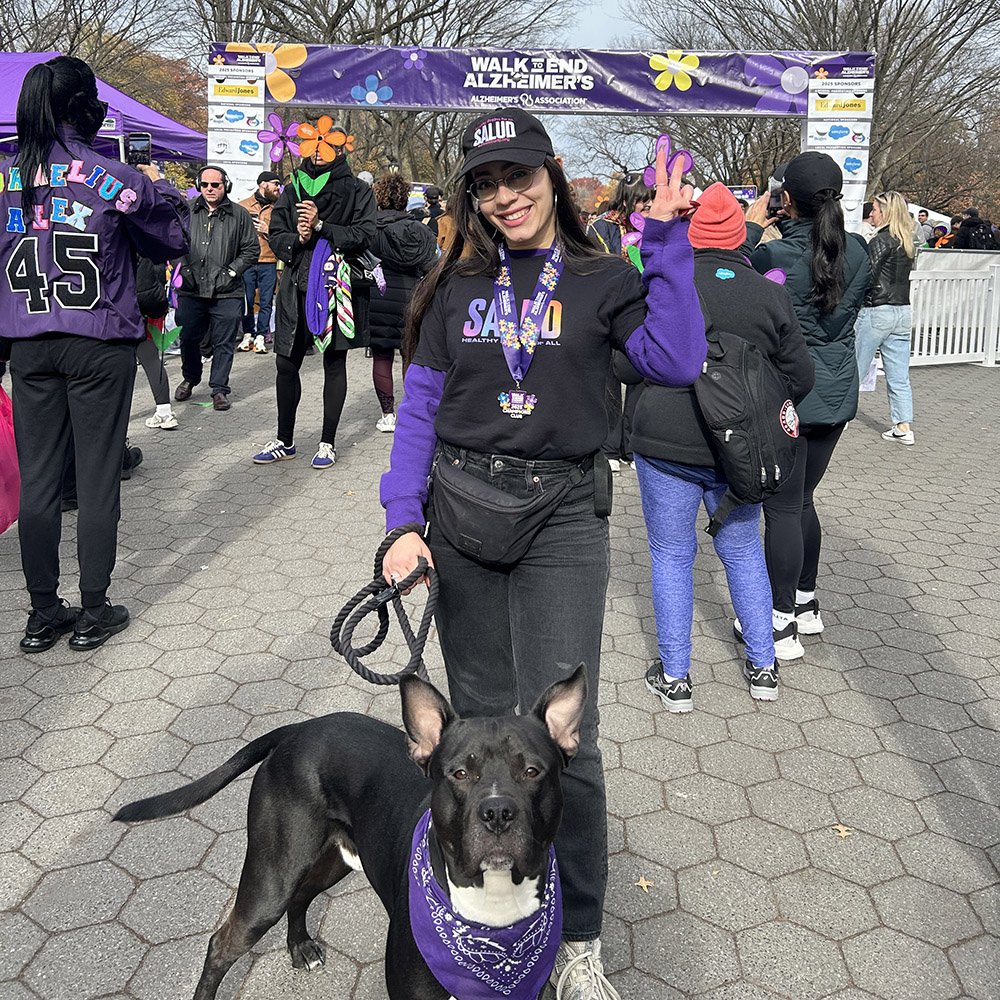
There's so many, there really is so many. Definitely, like, as a student in Children's Aid, it for sure just helped me be a full person, and just gave me really such a rich childhood. The theme of today's topic is on community schools, and the research that I do is community engagement within brain development. When I was a staff member, I did the Mind in the Making training, which I absolutely loved—it was phenomenal, I think about it still to this day, I absolutely loved it. At the time I was studying psychology, and my research interest has always been within neuroplasticity, so the two just were—it was so serendipitous, there was magic, it really just fed into each other. And a lot of that—neuroplasticity, Mind in the Making—I incorporated into the curriculums that I worked with my students, and again, just carrying on this community engagement model in my research career. As I was studying, both undergrad and also when I was doing neuroscience research at Columbia, there's so much incredible research, and I was really again focusing on neuroplasticity, but looking at it within the social determinants of health. Why is the academic lab and the clinical lab and our schools and our communities—why is nobody talking to each other? The work that I do as a researcher is focusing on underrepresented populations, because so much of our research largely doesn't include people like us as research participants, as the researchers and clinicians—and this is a problem. One of the important things about research, good research, is that your results are generalizable. We want that high generalizability because that means there's high external validity, right? And so if you have this really important question, what are the implications of poverty and how that affects children's brain development—that study needs to be representative of our population, of all of us. You know, currently I'm at a dementia research lab. Dementia affects everybody, but it affects us all differently. Blacks and Latinos are overrepresented when it comes to dementia diagnosis—Black and African Latinos are twice as likely to develop dementia, and Latinos are one and a half times as likely, yet we are underrepresented in the research that informs the clinical trials, so the medications that perhaps our abuelitas receive, but also in understanding how these disease processes manifest in our communities—it's different. There is historical reason why our populations approach science with hesitation, and I think it's really important to recognize that, not ignore it, but how do we rectify that so that our communities and our populations are included in the research as more than just a participant. The work that we do now with the lab, we use a community engagement model. I, as a community research liaison, essentially work as a bridge between the community and the clinicians, and the work that we do is in partnership with our community. We hold quarterly meetings, our community science partnership board meetings, where we bring in our community members from different organizations, just from around the neighborhood, and we share our research results. We also share that with our participants so they know about their health, and ask, like, how can we make this research better, what are we missing so that people are comfortable, so that they feel safe, so that they're engaged, so that they're empowered. We did similar things when I was at Columbia doing the brain development study—another advisory partnership board meeting, for the Baby's First Years study, which I worked on while at Columbia, which is the first poverty intervention study in the United States that explored how supplemental cash gifts can affect a family's—families and children's brain development, cognition, thinking. And so we're in this advisory board meeting, we're meeting with all of our scientists on our study and different industry leaders, and we're on Zoom, and everyone's introducing themselves, and Phoebe Boyer was one of our advisory board leaders, and she's like, hi, I'm Phoebe Boyer, president and CEO of Children's Aid, and I immediately was so happy, I was so excited. So when it came around to my turn to introduce myself, I said, hi everyone, I'm Chanel Ramirez, I'm the researcher here for the New York City site. And Phoebe, it's so great to meet you because I'm a Children's Aid kid. And I know that she was really happy—as soon as our meeting ended, I of course called my mom, and I'm like, Mommy, you'll never guess who was in my meeting, Phoebe. And of course it really was exciting for me to have that full circle moment, now, during my research career, still having that tie back to Children's Aid—it was really, really fun, it really is remarkable.
Abe (23:27)
Mm.
Drema (23:28)
Yeah, I mean, so inspiring, and listening to what you're studying, I just know it's gonna have such a meaningful impact on the communities we serve. So, from Cinderella to researcher, right—given your story, what advice do you have for that next generation, those Children's Aid kids coming behind you?
Chanel (23:38)
Hope that's the—that's the dream. Children's Aid kids, be multipassionate and pursue your passions passionately. You don't have to just stick to one thing. Whatever it is that gets you excited, that you look forward to, that makes your heart song sing—do it.
Drema (24:18)
Thank you.
Abe (24:20)
Awesome. And what's powerful is that, you know, these experiences that you talked about—they don't just stay in one moment, they really carry us forward.
Drema (24:27)
And so now we're joined by someone who represents the next chapter.
Abe (24:32)
Troy, thank you so much for being here with us. Do you want to say a little bit about who you are and your connection to Children's Aid?
Troy (24:32)
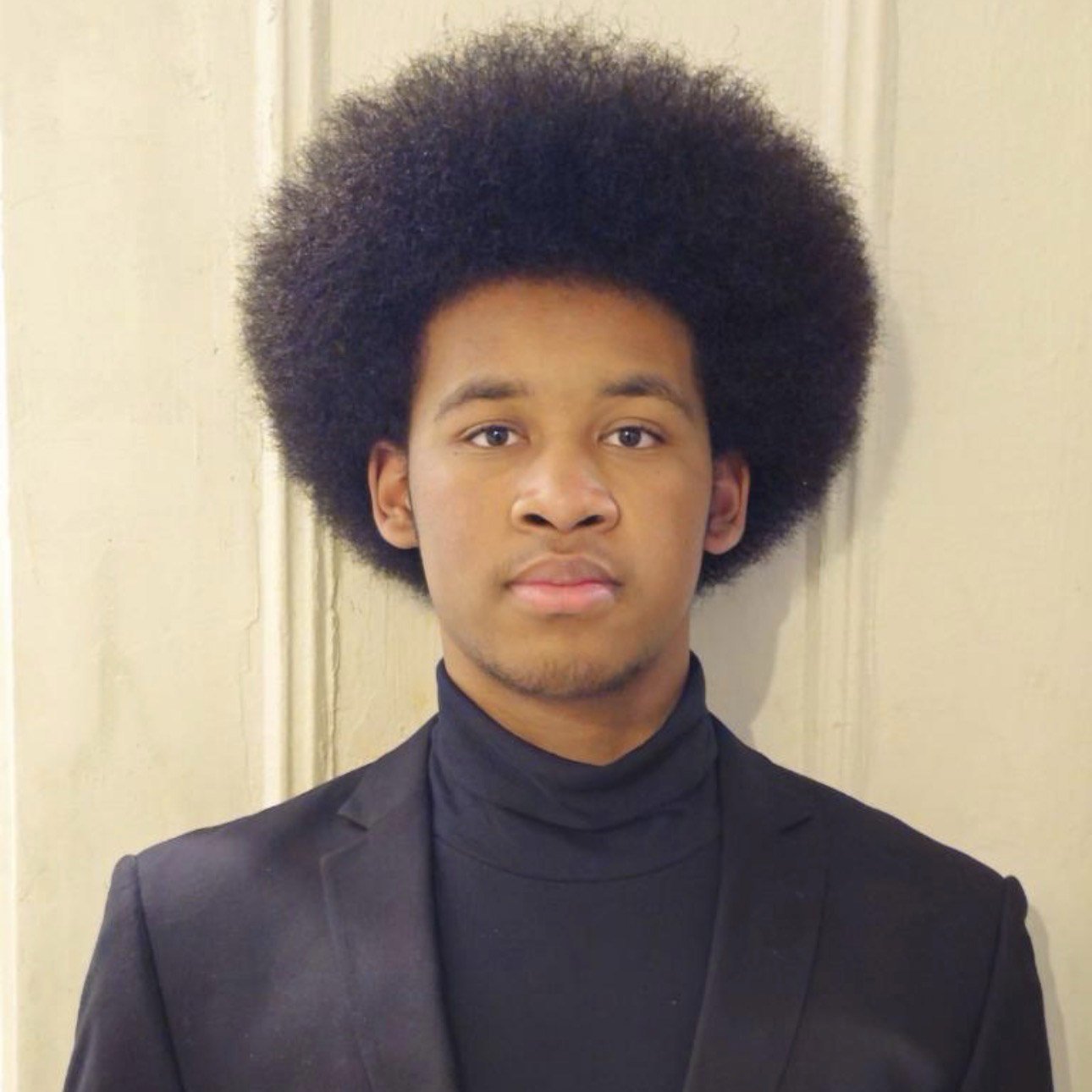
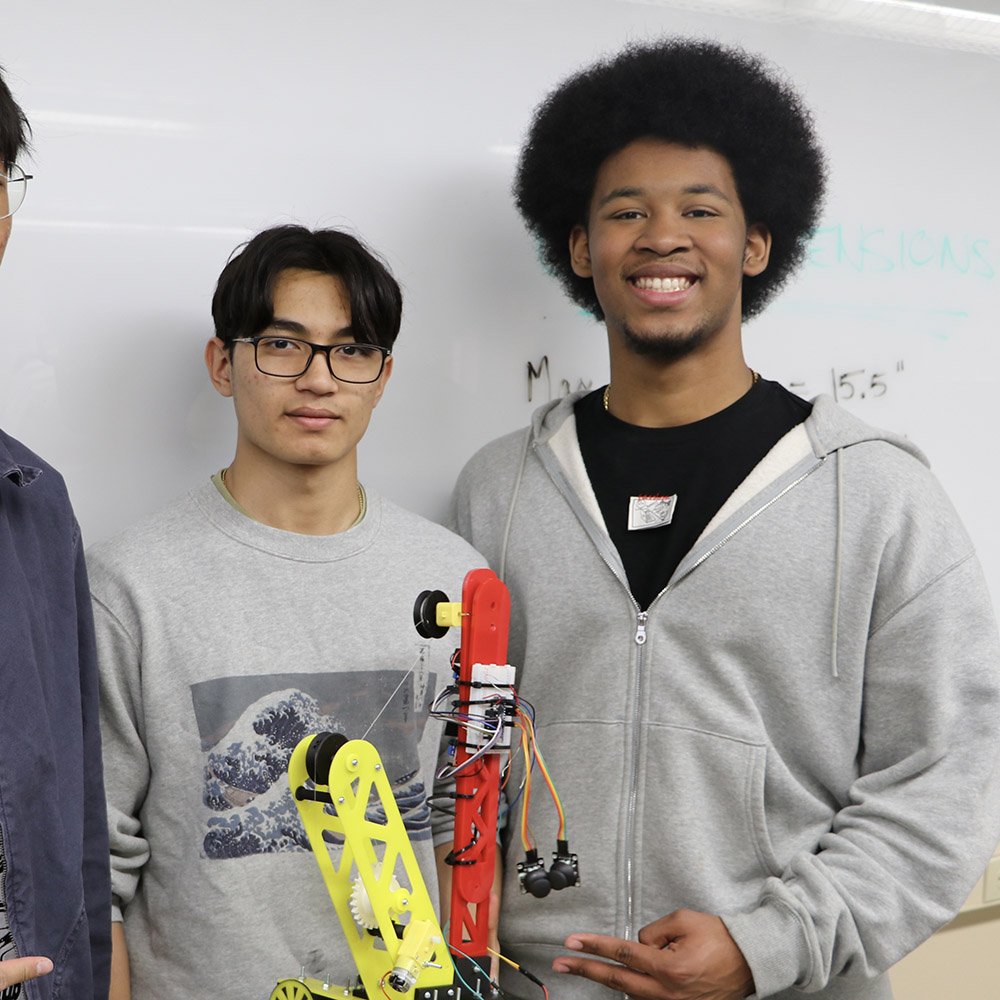
Well, thank you very much. Hello, my name is Troy Brown. I am currently a freshman, studying mechanical engineering at the University of Wisconsin, Madison. I am also a Posse Scholar, which is a full tuition scholarship that I received for my merit and also the leadership that I showed in my high school career. Before that, in my elementary and also my middle school career, I was a part of Children's Aid College Prep Charter School, which was a kindergarten through eighth grade school in the Bronx, New York, which I was thankfully able to get into halfway through my kindergarten year. Both of my parents were part of Children's Aid—my mom actually worked under Dreema herself, and my dad worked in another agency that was on 45th Street in downtown Manhattan, and also, he recently, in the last five years, moved up to the Bronx, which allowed him to be a little bit closer to me and my family, which has really helped me grow as a person inside and outside of school.
Drema (25:46)
So you, Troy, were able to have a pretty full Children's Aid experience from kindergarten through eighth grade. What stands out to you the most about your early experiences?
Troy (26:03)
Actually, funny enough, the first thing—which is very minor—that came to my mind was advisory, when I was in, I believe, elementary and also middle school. So advisory was about an hour block, between, I believe, the beginning or the end of our class days, where we were just able to sit in like a homeroom talking to other people in our class—which was normally just people in our grade—and we were able to relax a little bit and also talk about issues that we might have during the school day, and also talk more about how we feel, that was a little bit less academic. And also, something similar to that was the field days that we had while I was in elementary and middle school, which really helped me build relationships with a lot of my classmates that I might not have been able to see every single day, or didn't talk to on more of a social, less academic sense—which those two, advisory and also field days, really helped me build a very strong connection with the people in my class.
Host (26:03)
Thank you for that. Really, really important work and such a great memory, I'm so glad you shared that. So now let's think about today—you're now a student at Wisconsin, you're studying engineering. How do you think your experiences at Children's Aid kind of gave shape to what you're doing now?
Troy (26:03)
So yes, Children's Aid—it's in the name, it's a college prep school. So, very thankfully, the school gave me not a brief knowledge, but a pretty in-depth knowledge in most topics that I would need in my high school but also my college career. So we would have different life science classes, different math classes, and also different English courses that we had to take inside of those elementary and middle school classes, which I think really helped propel my knowledge in my high school career, because thankfully, with the knowledge that I was given at Children's Aid College Prep School, I was able to become the salutatorian of my graduating class in high school. And I believe that was one of the main reasons that I was able to get the scholarship to come to this very prestigious university that the University of Wisconsin, Madison is, because, specifically for my major, I think they're the thirteenth rated engineering program—which is a main reason why I was drawn to the school, because they have such a good social scene, and they have such a good academic prowess, that I felt that's what I really wanted to do and excel in, in my academic career—which Children's Aid was able to provide me all the knowledge and all the intermediate math classes and science classes that really piqued my interest, which allowed me to get more in depth in the engineering that I would later pursue in my college career.
Drema (28:58)
I know Dr. Fleshman is gonna love to hear that.
Troy (29:02)
That's right, that's right, yeah.
Host (29:02)
And any thoughts about what you want to do in terms of career? You don't have to decide today, but just wondering if you have any thoughts about that.
Troy (29:02)
Yeah, so currently, currently I am—I'm not declared yet, but I am—I guess it would be like a pre-engineering track, 'cause in my college you have to meet progression, and you declare in your second year of college, like most colleges do. So right now I'm declared, I guess, a pre-mechanical engineering track. But I've also been thinking about maybe switching to some sort of industrial engineering, in that sort of space, and that will hopefully get me into maybe HVAC systems of some sort of buildings, or maybe some sort of system optimization, where I can be able to apply the skills that I'm learning now to do that in my career.
Host (29:02)
Sounds terrific.
Drema (29:54)
So when you hear Chanel's stories, Troy, what resonates for you?
Troy (30:02)
So actually, the first thing that caught my mind was Wagon Road, because I didn't completely forget about Wagon Road, but once Chanel said Wagon Road and what that camp truly provides for us, it just made me remember so many memories, because I think I went to Wagon Road for basically every single year that I was eligible—I believe I went from kindergarten at least up to six, maybe seven.
Drema (30:31)
You were there every summer.
Troy (30:34)
I was there for a while. So it was really cool just remembering all those memories, all the overnights that we did at Wagon Road, and all the day trips that we were also able to go on, which was really cool. I didn't learn how to swim there, but that really helped me learn how to swim. Like horseback riding—like Chanel said, that was really, really fun, because that was like a block that we got to do a good amount of the days. So that was really cool, and also the zip lining and all of the outdoor experiences—yes, it's all coming back.
Chanel (31:08)
The rock climbing.
Troy (31:11)
Yeah. So that was—yeah, you don't really get that in New York City, there's not really much that you can zip line or rock climb, 'cause we live in a city, so there's not much like horses that you can go to, unless you go to a zoo, and then at a zoo you can't really ride them. So that's really cool that they were able to provide that experience to us, which was really, really engaging, and also, because I went for a good amount of years, I was able to see other people that also continuously went to the program during the summer. So I was able to see them progress as people, and also build some relationships that I still have today. It was really cool to see how people grow year in and year out, which I feel like is very cool, to just have that community that was built at Wagon Road that you might have from your academic year in school—or, 'cause I think there were plenty of schools that were represented at Wagon Road. So being able to see them every single summer was really cool to me, and also building those relationships was very important.
Drema (32:13)
Mm-hmm. Yeah, I remember sometimes when I would go up to Wagon Road during the summer to just check in on you all, make sure you were doing what you're supposed to be doing up there. And you all would see me up in there with my little suit on, and you'd be like, what are you guys doing?
Chanel (32:30)
What are you doing up here?
Drema (32:32)
It was an interruption to the magic of Wagon Road. But I'm glad that resonated for you. Chanel, you wanna say something?
Chanel (32:41)
You mentioned the overnight and it unlocked a memory. So, I'm first generation Dominican, I have very strict Dominican parents, I was not allowed to sleep anywhere. I would beg, and they would say, tú tienes tu cama—like, you have your own bed. And it was time for summer camp, and it was the overnight, and I begged, I begged, I begged—and we had two overnights, I think, 'cause it was session one, session two. Session one, my mom again: you have your bed, no. But that one, I totally did—that was the one and only time. Like, every other overnight I was allowed to have that. And so, that was my one and only time as a kid, like, sleeping, like, having a slumber party essentially. My first time having s'mores, because we had a campfire, and the night sky—because again, like
Abe (33:13)
Your mom worked at Children's Aid.
Chanel (33:38)
I live in Manhattan, there's so much light pollution—Wagon Road is upstate in Chappaqua, the stars at night were so gorgeous. I remember coming back home being like, that was the greatest night.
Abe (33:52)
And just every kid deserves that kind of experience.
Chanel (33:54)
Hundred percent. Yeah, because why can't everybody ride horses? Why is it only the kids of the Upper East Side who can go to the Hamptons and ride their horse?
Drema (34:04)
So yeah, community schools aren't just about education.
Abe (34:08)
They are about removing barriers to learning so all kids can learn.
Drema (34:12)
And when you support the whole child, you open so many doors.
Abe (34:15)
Chanel, Troy, thank you both so much for sharing your stories and being with us today.
Chanel (34:15)
Thank you.
Troy (34:15)
Thank you very much for inviting me. I really appreciate it.
Chanel (34:20)
Thank you so much for having us.
Drema (34:25)
And thank you all for listening and joining us.
Abe (34:28)
And we'll see you next time on Every Step of the Way.
Drema (34:32)
Right.