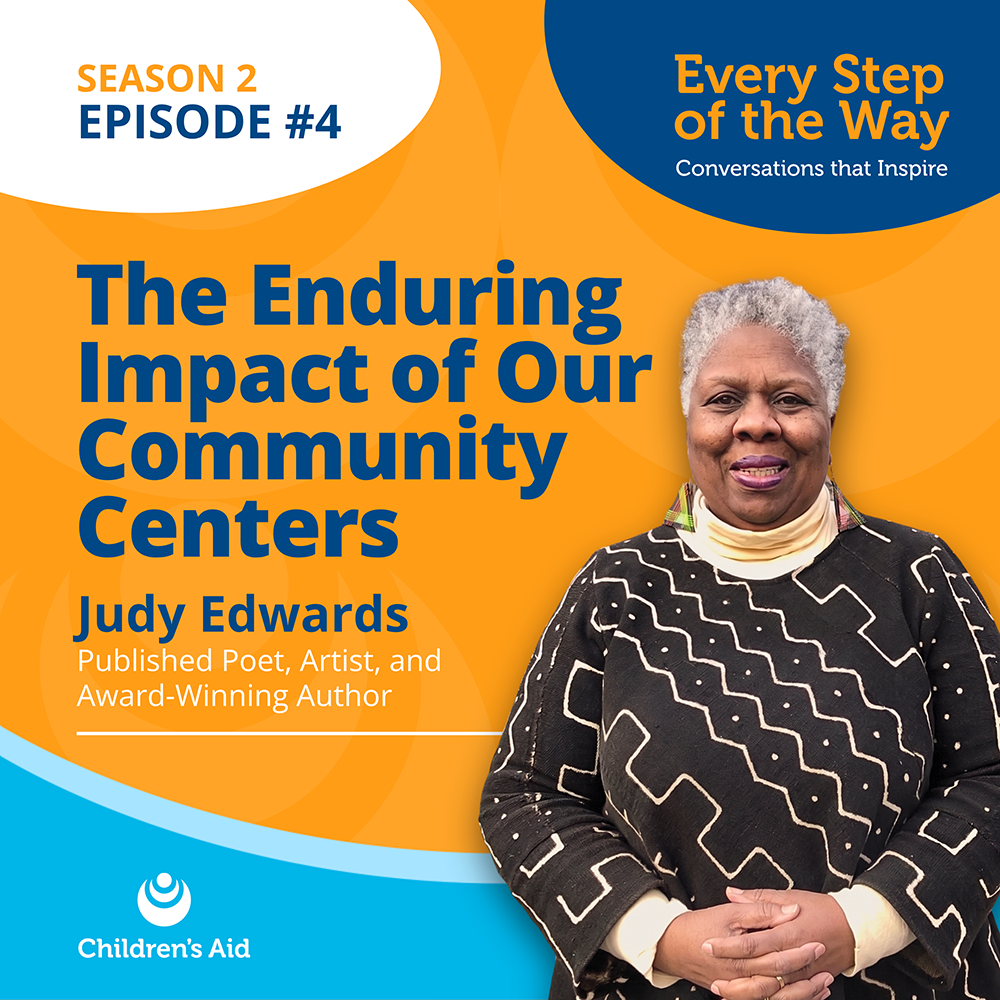
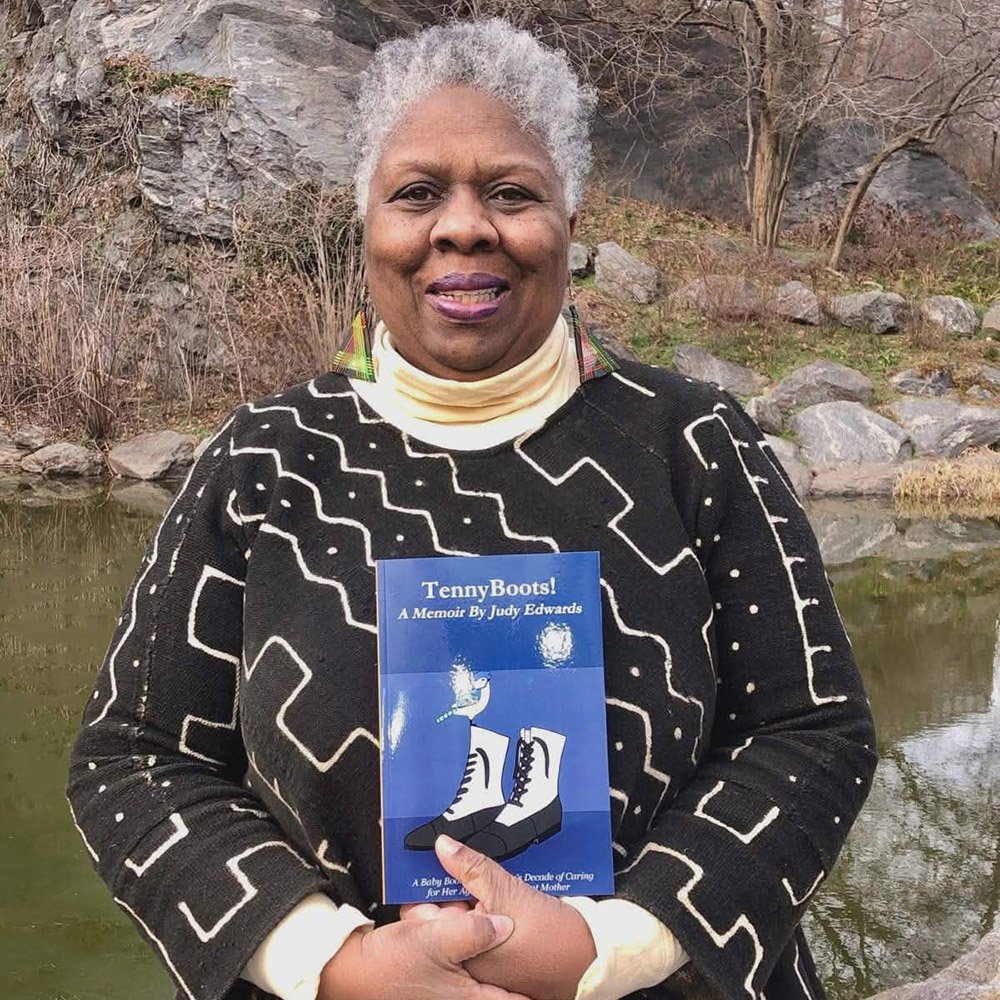
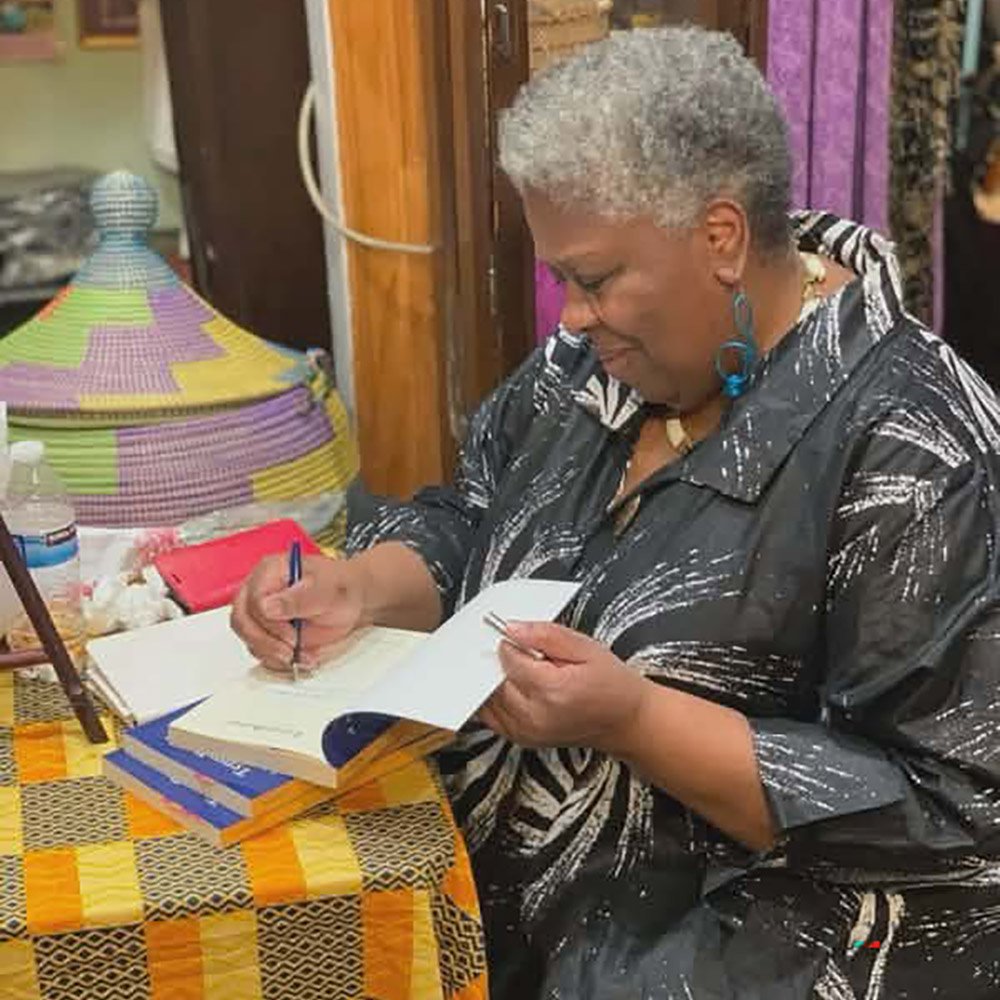
Judy Edwards (00:00)
I'm so honored to be here and to tell my story because Children's Aid was a huge part of my life and a huge part of my children's and grandchildren's lives as well.
Casper Lassiter (00:12)
I can give you story upon story about the impact that a community center had on me growing up as a young man on 118th Street in Harlem in the 80s.
Judy Edwards (00:24)
It was a place where we all went. We could play games, we could go after school. It was open Monday through Friday until about 10 PM. So many of us had parents who worked, and that was a safe place. And we just all flocked to the community center. When you're around people who have achieved, then you say, “Oh, they look like me.”.
Casper Lassiter (00:45)
Yes.
Judy Edwards (00:46)
“It's possible that I can do that.” They were very proud of us when we achieved it, and we knew it. And that meant so much. Because some of us probably were not getting that at home. So to have someone see you and then applaud you, that just takes you to the next level.
Sarah Jonas (01:06)
These community centers are more than just spaces and more than just a set of programs and activities. They're really about relationships, trust, development, confidence, pride beyond an individual to a family, to a whole neighborhood, to a whole community.
Judy Edwards (01:19)
We are three generations of the Children's Aid family.
Sarah Jonas (01:26)
Hey. Hi Judy.
Judy Edwards (01:28)
Hi.
Sarah Jonas (01:28)
I'm Sarah. So nice to meet you.
Judy Edwards (01:30)
Nice to meet you too.
Sarah Jonas (01:31)
Welcome.
Judy Edwards (01:32)
Family. Family.
Casper Lassiter (01:33)
Good to see you. How are you?
Judy Edwards (01:34)
Hi. How are you? Hello.
Casper Lassiter (01:35)
Welcome.
Judy Edwards (01:36)
Thank you.
Sarah Jonas (01:38)
Hi, my name is Sarah Jonas, and I'm the Vice President of the Youth Division here at Children's Aid. It's my pleasure to welcome everyone back to the Children's Aid Podcast, Every Step of the Way. Today we're going to be talking about something that's near and dear to my heart and to Children's Aid: community centers. Community centers are more than just the programs that they offer. They're really places where young people have the chance to discover who they are. Families get the supports they need to thrive across generations. And at the heart of all of that are relationships that are forged and take root for a lifetime for so many folks.
Casper Lassiter (02:12)
My name is Casper Lassiter. I'm the Director of Children's Aid, Dunlevy Milbank Center, and also an alumnus of Dunlevy Milbank Center. So I can give you story upon story about the impact that a community center had on me growing up as a young man on 118th Street in Harlem in the 80’s, and also as a leader, helping young people, helping staff realize the potential that they have to do great things. We are the staple in the community, whether it's connections to families, whether it's connections to school. We are that hub that keeps the community buzzing. And right now it's just a great experience, just seeing kids that are coming to the center where I grew up with their parents or that I knew their parents. So the multi-generational impact that Milbank has is amazing. And I would not be in this chair today if it were not for my community center.
Sarah Jonas (03:13)
So Casper, I am so excited, I know you are too. We have an awesome guest today, and someone whose story really tells the story of what community centers are and what they're all about. So it's my great pleasure to welcome Judy Edwards to the podcast today. Welcome, Judy.
Judy Edwards (03:27)
Thank you. I'm so honored to be here and to tell my story because Children's Aid was a huge part of my life and a huge part of my children and grandchildren's lives as well.
Sarah Jonas (03:41)
Right, because I know you're a Children's Aid alum. I know that you also have this amazing career. You're a lawyer.
Judy Edwards (03:47)
Well, yeah, I went to law school. I'm a writer. Because of what Children's Aid gave me, I spent twenty-five years as chair of the board of a Head Start agency trying to give back and shape young lives before they turn five. So, so much was given to me that I've always felt I had to give back. I go by that saying: “To whom much has been given, much is expected.” And that's always been what guides me.
Sarah Jonas (04:20)
Well, and I know and I remember that you shared at our benefit last year, you shared a story about winning your first Tony Award at age twelve. Okay. Now I know it wasn't on Broadway, but it was at a community center. It was at the Stephen Foster Community Center in Harlem.
Judy Edwards (04:36)
Yes.
Sarah Jonas (04:36)
Do you want to tell us a little bit about how that came to be?
Judy Edwards (04:40)
Sure. I lived in a NYCHA development, Stephen Foster Projects, and it was a community; we called the Children's Aid Society back then. Center in one of the buildings, and it was a place where we all went. We all went and we could play games, we could go after school. It was open Monday through Friday until about 10 PM. So many of us had parents who worked and that was a safe place, and we just all flocked to the community center. We called it the center. And there were so many things we could do. There was a game room; the guys could play basketball outside and go over to Milbank. There was so much to do. So this young man had just graduated from Hofstra. He came and he wanted to do this whole theater class. And he didn't have many takers because it's the middle of Harlem and like “theater?” But he was so diligent about, he commandeered a room downstairs, he painted it black, he brought in pieces of wood, and he made the stage. And anyone who was nosy enough, like I was, to go down there and like, “What are you doing?”. He's like, “You're going to be in my class.” and “You're going to be in my class.”. Like, we'll see. So when it was all done, he set up; he's like, “This is going to be a drama class. We're going to put on plays, we're going to learn techniques.”. And I'm like, “Okay.”. And so I started going down there, and he was so serious about what he was doing with us. He was so professional that here I am at ten or eleven sitting there, and we were doing sense memory exercises from the great theater teachers, and having not been exposed to that before, it was just it just opened another world. So I became one of his favorite actors for Thespians, he would say. And I learned that word, and we put on plays; I remember we did Hello Out There. I did a monologue from St. Joan that I still know to this day; it’s still in my brain. Bread has no sorrow for me and water no affliction, but to shut me from the light of the skies and the sounds of the fields and flowers to chain my feet so that I could never again walk in. Anyway.
Sarah Jonas (07:21)
Wow, that’s amazing.
Casper Lassiter (07:23)
Wow, wow.
Judy Edwards (07:24)
Anyway, that's from Tony.
Sarah Jonas (07:26)
No wonder you have won the Tony; I can see why.
Judy Edwards (07:29)
That's from twelve years old.
Sarah Jonas (07:32)
That's amazing.
Casper Lassiter (07:32)
That’s amazing.
Judy Edwards (07:33)
Yeah, so it was great. And then he fanned out into the community because he was friends with a lot of moving theat theater people, Woody King, all sorts of… So he would get shows for everyone who came to the center if they were a certain age. I was supposed to start up on the down staircase, but I wasn't old enough. You had to be fourteen. So my sisters and other people from the community center went and started those shows. So anytime you mention his name now, because I do sometimes in the book, and I say, “Oh, Tony Major,” everyone says, “I remember him, he got me into this, he got me into that.”.
Sarah Jonas (08:15)
He saw that spark in you and gave you that platform to just kind of develop it and lean into it.
Judy Edwards (08:21)
Yes, and he saw that first, and he would say to me things he told me things - I didn't have a father in the house - so he would tell me things like an older brother or a father figure and he would say, “Judy, you have that. Your eyes, your this. You've got what it takes, don't waste it.”. And he was such a… I kept in touch with him until he passed away when he was eighty-five.
Sarah Jonas (08:47)
It’s beautiful.
Judy Edwards (08:47)
Yeah, he had moved to Florida, and he was actually in charge of the Zora Neal Hurston Festival. And whenever he'd come up to see his mom, he'd come to see me. So yeah.
Sarah Jonas (08:58)
So nice. So cool.
Judy Edwards (08:59)
And that was from Stephen Foster.
Sarah Jonas (09:02)
It all started there.
Judy Edwards (09:03)
Yes.
Casper Lassiter (09:04)
See? Long-lasting connections.
Sarah Jonas (09:07)
Yeah. Yeah, that's absolutely right.
Casper Lassiter (09:08)
Yeah. Long-lasting connection. So Mr. Judy, let me ask you a question. How did the center itself influence how you saw yourself or what you wanted to become?
Judy Edwards (09:17)
That's a good question. And I've often discussed that with a lot of my peers because we were in Harlem in the seventies, young kids our age, our peers overdosing. The schools back then were pretty good. So, I mean, we went to PS One Eighty-Four or PS One Seventy, and they were pretty good. But our parents had just migrated from the South. And so they were not New Yorkers quite yet. They were still Southerners, and we were the first generation of migrated children, the children of people who had migrated in the big migration from the South to the North. A lot of things that they couldn't tell us or couldn't show us, we got from the community center because a lot of the staff there were college graduates or native New Yorkers who had been here for a while, and so they had this je ne sais quoi, so to speak, or something that our parents didn't have. And oftentimes our parents were just trying to put one foot in front of the other. My mother worked two jobs and on the weekends. So we didn't have that in the house. She went up to fifth grade, and then she left to go to work, so it threw us into a whole different milieu, so to speak, where we were around people who had achieved. And when you're around people who have achieved, then you say, “Oh, they look like me.”.
Casper Lassiter (10:58)
Yes.
Judy Edwards (10:59)
“It's possible that I can do that.”. So I think from being in the center, having people like Mr. Major, Miss Talbert, and other people who were there, I think I learned early on that I wasn't limited; I wasn't just limited to being from Harlem, having a baby, not finishing high school or any of those things. Because Mr. Major was my favorite, and he was from Hofstra and he lived on Long Island and he rode a motorcycle.
Sarah Jonas (11:35)
What could be cooler?
Judy Edwards (11:37)
Yeah. Exactly. So it it it really opened the possibilities for so many of us. And even as I speak to my friends now, they say the same thing. From my building, we have people who became very successful. Very successful. I'm not an aberration. We have Charles Williams, who became a doctor, and we have Nelson Wales; he became an Olympic bike rider. He won second place. We have people who went on and became administrators and stuff. So all of us, if we didn't die of heroin and if we didn't OD, we pretty much became upwardly mobile, and I am friends with about ten women who we all have children the same age, and those children are all well educated, doing their thing, and that's where that generational lift came from. Because we started there and we saw that things were possible that our parents weren't. Our parents always wanted what was best for us. But wanting what's best for someone and giving you the wherewithal to do it is two different things.
Sarah Jonas (13:06)
So Judy, I'd love to… You're talking a lot about how the center was this place of creativity, and you talked about some of the mentors that you had and who went on to lead and do wonderful things. And I know that centers are places where young people often get those opportunities to creatively express themselves and to be leaders. Was there anything like that that you experienced when you were at the center?
Judy Edwards (13:29)
Yeah, actually there were quite a few instances, but one that lasts until this day was we were, I guess we were about thirteen; we the girls from my building formed the club. And we called ourselves the Playgirls. And it happened in nineteen sixty-five, and we had a whole song: “In nineteen hundred and sixty-five. A new club came alive. All the girls from a hundred and fifteen joined together and became a team.”. And then it went on. And we introduced ourselves.
Sarah Jonas (14:03)
I love that.
Judy Edwards (14:04)
But it was in the center with Miss Talbert. And she was our - she was the staff person who was involved with clubs - we formed the club, the Playgirls, and we were like, yeah, Miss Talbert. Then we realized Miss Talbert was also the staff advisor for our competitors, the Romantics from another build. So we had a bit like, “Well, she's my advisor. Well, she's my advisor.”. But what we got out of that, we really were able to become leaders, and we decided how we would fundraise, and we executed it. We decided to do things in the projects that we wanted to since we were in competition, and maybe she put this into place because, come to think about it, since we were in competition with the Romantics, we wanted to out-romantic the Romantics. And we would give parties, send to parties, and during that time we didn't have invitations, we'd make index cards, and we'd write on them: The lights are low, the music's fine, come down and have a good time, but no sneakers.
Sarah Jonas (15:24)
You had a dress code.
Judy Edwards (15:25)
Yeah, we had a dress code. But yeah, and we were young. We were twelve and thirteen. So we were actually taking those leadership positions.
Sarah Jonas (15:33)
Absolutely.
Judy Edwards (15:36)
With her loving hand, of course, she'd let us know how far we could go, but we, yeah, we certainly did.
Casper Lassiter (15:43)
And we were talking earlier, and you mentioned some of the other spaces within Children's Aid that you visited. The center in Greenwich Village and learning to swim in Milbank. Could you tell us about those experiences?
Judy Edwards (15:56)
Yeah, so Milbank was just two blocks away from us. We were on a hundred fifteenth Street; Milbank's on a hundred seventeenth. So Milbank always had a lot more to offer, I think, because it was an independent place. It wasn't just stuck in the community center. So they had, and I just remember we went to dental. We went to the dentist there. We had medical appointments there. We had swimming, swimming lessons there. The guys went to basketball. It's big basketball history from Milbank. All the guys went through Milbank and Buster and all of them. It's a whole legend. So yeah, we made use of all of that, and my daughter learned to swim at Milbank, and I also took her to the dentist at Milbank because it was very inexpensive and very good. My grandchildren availed themselves of Milbank; they learned how to swim. And they also went to Wagon Wheel. They were lucky enough to get the space two years in a row because it’s a system, I think, or something like that. Yeah, so they went to Wagon Wheel, and they really loved it. I'm a hands-on person; I want to see so I went up there on a trip with them. It was a wonderful place where they went. Yeah. So they really loved it.
Sarah Jonas (17:34)
And I love how you're speaking about that specialness of a center that it isn't just for or about individual children, but it really is the whole neighborhood, the whole family, the whole community. That intergenerational piece that you're lifting up.
Judy Edwards (17:47)
And it still is. Milbank still is. I mean, I go there sometimes now, and I know Senator Clear gives something near…
Casper Lassite (17:59)
Yes, we have a great relationship with Senator Clear.
Judy Edwards (18:00)
Yeah, and then some of the young men I grew up with, they go back for their basket.
Casper Lassite (18:06)
For the Buster Bryant Day. Yes, alumni day.
Judy Edwards (18:09)
So I go back for that.
Sarah Jonas (18:11)
Full circle.
Judy Edwards (18:12)
Yeah, so Milbank is still like a beacon in the community. Even more so maybe now. I'm not sure if more so. Because, you know, the community is gentrified now. And there are different migrants that are there. You have a different population. You have Africans, and you have people who are at the same place we were back in the fifties and the sixties. And you're still doing the same thing, providing the same service.
Casper Lassiter (18:46)
Still doing the same thing. Yes. And I think, you know, and this was said to me by our CEO a few years back, that even though the community's changing or whatever, Stephen Forster Projects is still behind those high rises, right?
Judy Edwards (18:59)
Yeah. Right. Across the street.
Judy Edwards (19:00)
So the need is still there in the community, so we're still providing those low-cost services for those families. In those communities behind all of these brownstones and high-rise buildings, the pockets of families that need those services, we're still serving them, and I'm proud that the agency's committed to do that, even with the big change that's going on.
Sarah Jonas (19:21)
And to sustaining that. The community centers are still so much at the heart of what Children's Aid is all about, and the kinds of stories that you're telling resonate with us today. And with you, as you said, when you go to Milbank now. Absolutely.
Casper Lassiter (19:33)
Yeah, it's about trust.
Sarah Jonas (19:36)
Yes.
Casper Lassiter (19:37)
The folks that we walked into that building, trust. Building those relationships. And it's those things that I think keep us going, that keep folks connected, the place that they can trust, knowing that a parent knows that I can go to work all day and at five o'clock when I get there my kid is safe, my kid is happy. And these are the things that we enjoy doing.
Judy Edwards (19:59)
Yeah. And that's the thing though, I don't ever remember us having any big scandals, like this happened or that happened. I don't recall any of that.
Casper Lassiter (20:11)
Thank goodness.
Sarah Jonas (20:13)
We've done our job. We can go home.
Judy Edwards (20:18)
But I'm thinking that has to do with the staff being so embedded in the community.
Casper Lassiter (20:24)
Yes, it’s one piece, yes.
Judy Edwards (20:26)
And because the people that we had, they really wanted the best for us. All of these people, they were like our parents; they were surrogate parents. So it was no way they were going to like do anything that was not towards our best interest.
Casper Lassiter (20:45)
That’s right.
Sarah Jonas (20:45)
Well, and as you said earlier, those folks held high expectations for you all, but they also, to this day, they really see you. They saw you, they saw who you were, what you were interested in, what your passions were, and then they knew how to connect you to that or provide that opportunity.
Judy Edwards (20:59)
And I think a lot of that was because a lot of peop of those people were from the community. So they had an investment not only in us but also in the community.
Sarah Jonas (21:12)
So, Judy, hearing all of these incredible stories that you're sharing really underscores, I think, that generational impact that a community center can have. So I'd love if you could share with us a little bit about how your experiences at the center shaped your career and sort of where you went with your life, including becoming an artist and becoming a lawyer, going to college, graduating from college. How did this experience sort of connect to what you did later in your life?
Judy Edwards (21:36)
I was thinking about that, and in many different ways, I guess one of the most important ways is that I knew there was something different. And I knew that because there was something different, I wanted that for my daughter. And I had my daughter when I was twenty-two years old, so I was pretty young. Because of the experiences that I had already had, the experiences were many because when I left Stephen Foster, I was paired with Children's Aid, which paired me with pretty well-known actors, people who were out there actually acting. So I was able to, at that point, go all around the city with these people doing different things. And I think I was sharing with you that one of the people was Lou Myers, who would later be Mr. Gaines on The Hillman Show on A Different World. And he became my mentor, and there were other people like that. So I had these people to look up to, but I also had those people as people I didn't want to disappoint. So it becomes like a family, another family that you kind of answer to. So, I went to Hunter College first, and I thought I wanted to be a nurse, and I certainly didn't want to be a nurse.
Sarah Jonas (23:17)
Not for me. But you learned that. That's good. You've learned that.
Judy Edwards (23:20)
And I couldn't do it, so I dropped out at that point, and then I had my daughter, and then there I knew there was a certain way that I wanted to raise her because I'd been exposed to so much. So with her there were all these things that I wanted to do. I wanted her to be educated in a certain way. I wanted her to reach for the stars, and this is because I had gotten that. So I did, and then I went back to school after she was about four or five or something. I went back to school to finish my college. The whole while raising her and putting her into all manner of things. She became an equestrian at six years old, and she went to riding camps every year, and she went to a bunch of different schools also, and she would say that she would go to Milbank and things, and the thing is we had moved to the Bronx then. But I also, I always wanted her to have that Harlem upbringing that I had, that was such a sense of community because I've gone to a lot of different places and could not find that sense of community. So she was able to enjoy what I had. And there was a community center still in Stephen Fawcett because I'd bring her down to my mother's, and she would hang out there, and she was able to hang out in Harlem. She was able to hang out in Massachusetts riding horses. She was able to do all of these things.
Sarah Jonas (24:59)
And some of the things that you did maybe at the center. Maybe she had some of those kinds of experiences.
Judy Edwards (25:04)
Exactly. So she did. She w she was in a dance group. They would do dances in the circle.
Casper Lassite (25:10)
Yep, in a circle. Yeah, a foster, yeah. Town.
Judy Edward (25:13)
Yeah, so she understands that whole thing because she was able to get there. Now when her children came along, they were not as involved in the community. So their involvement was swimming. They learned how to swim at Milbank, and they did go to…
Casper Lassite (25:32)
The Wagon Road.
Judy Edwards (25:33)
The Wagon Road. Yeah. So we are three generations of Children’s Aid family. And a lot of my nieces and nephews, they all went through it too.
Sarah Jonas: So it really was intergenerational and family across the generations.
Judy Edwards (25:47)
Yeah.
Sarah Jonas (25:47)
It's great.
Casper Lassiter (25:48)
Judy, I want to go back to that because you've mentioned how important the staff was at the centers. What would you say to the staff working in the centers today, how important they are, even if they don't even realize it at this moment? What would you say to them?
Judy Edwards: That's a good question. I know we, as children, were always watching what the staff was doing. Our staff really were very professional with us. And I think that set the tone. So we knew just how far we could go with them. But we knew there was a boundary, and that children were supposed to do this, and the staff was supposed to act accordingly. So I guess I would tell the staff that l when you step into this place, when you put on that shirt, you are always on display and you should act as though you have the interest of every one of these kids in your hands. And if you don't understand that, then you don't need to be working with children.
Casper Lassiter (27:01)
And I think that is great advice. It's like you read our policy manual. I mean, these are the things that we actually say to them because a lot of folks, and you mentioned it, are from the neighborhood. You know, we kinda like that energy that they bring. So for a lot of them, we’d tell them, “You may be in a grocery store on a Saturday, and a kid may run up to you, Mr. Mike. You maybe just be hanging out with your friends, and a family walks by you. So you're always going to be put on notice when you take these positions; you have to realize the impact that you have in the centre as well as outside of the centre.”.
Sarah Jonas (27:35)
And like Judy was sharing earlier, like that we could- you're both saying that idea that the staff is of themselves from the community, so there's that sense of like we're all in the neighborhood together. And that provides, I think, that sense of connection and family and also those high expectations. Because you're sharing that pride in that community.
Judy Edwards (27:53)
Definitely. And definitely pride was part of it. Because they were very proud of us when we achieved, and we knew it. And they were like, “Oh, look at you, good job.”. And that meant so much. Because some of us probably were not getting that at home.
Casper Lassiter (28:11)
Probably, right.
Judy Edwards (28:12)
So to have someone see you and then applaud you, that just takes you to the next level. Like “I want to do this. I want to do this.”.
Sarah Jonas (28:26)
I could be this.
Casper Lassiter (28:28)
Sarah, as you can see, Judy's story is a powerful reminder that when you invest in one young person, it has a rippling effect on the neighborhood, on the community, at large. And it's just an amazing, an amazing experience just seeing young people after generation and generation come through the Milbank Center and become successful based on the work that we did with them.
Sarah Jonas (28:51)
Absolutely. And I think, hearing Judy share, it's you're realizing again and again that these spaces, these community centres are more than just spaces and more than just a set of programs and activities. They're really about relationship, trust, development, confidence, and pride beyond an individual to a family, to a whole neighborhood, to a whole community. Ax and I think that's really part of that impact and that intergenerational impact that Judy's story is really highlighted today.
Casper Lassiter (29:19)
And the fact that she passed it along to her daughter and to her grandkids. That is such the Children's Aid way. And this can be said for Milbank; this could be said for Fred Doug; it could be said for East Hall. The citizens are in our communities. You hear these stories over and over. That we're all different. We're all in different neighborhoods. But one thing is consistent is that multi-generational impact that we've had on families in those communities.
Sarah Jonas (29:42)
A hundred percent. Judy, I think we just want to thank you deeply for sharing your stories with us today. This has been so inspirational and educational. I learned new things that I didn't even know about some of the work that Children's Aid did in the past from you. And also just the generosity of your sharing of yourself and your stories with us.
Judy Edwards (29:59)
Thank you.
Sarah Jonas (30:00)
It really helps me see Children's Aid in even a deeper way. So I wanna thank you for that.
Judy Edwards (30:05)
Well, I have to thank Children's Aid Society, which we used to call it back then, for imbuing in me a sense of always wanting to give back and a love for children. And so I am known in the community as someone who's going to teach and preach to the young folks and say, “You can do better, you can do this, you can do that.”. I mean, the reason I went to law school is that, I think, in the two thousands, a lot of children were being jerked from their homes. I was chair of the board of Addie Mae Collins for about twenty-five years. I retired about two years ago. And as chair, is a head start. It was a community agency, and it was a head start. So we were right up close with children and families, and we saw a lot of children being yanked out of their homes for foster care. And for like minor things. We were put in positions so many times where people would come to the parents and say, ACS is coming to my house and I'm so scared. So we would have people to sit there with them because they didn't know their rights, and to really stop children being removed on a moment's notice.
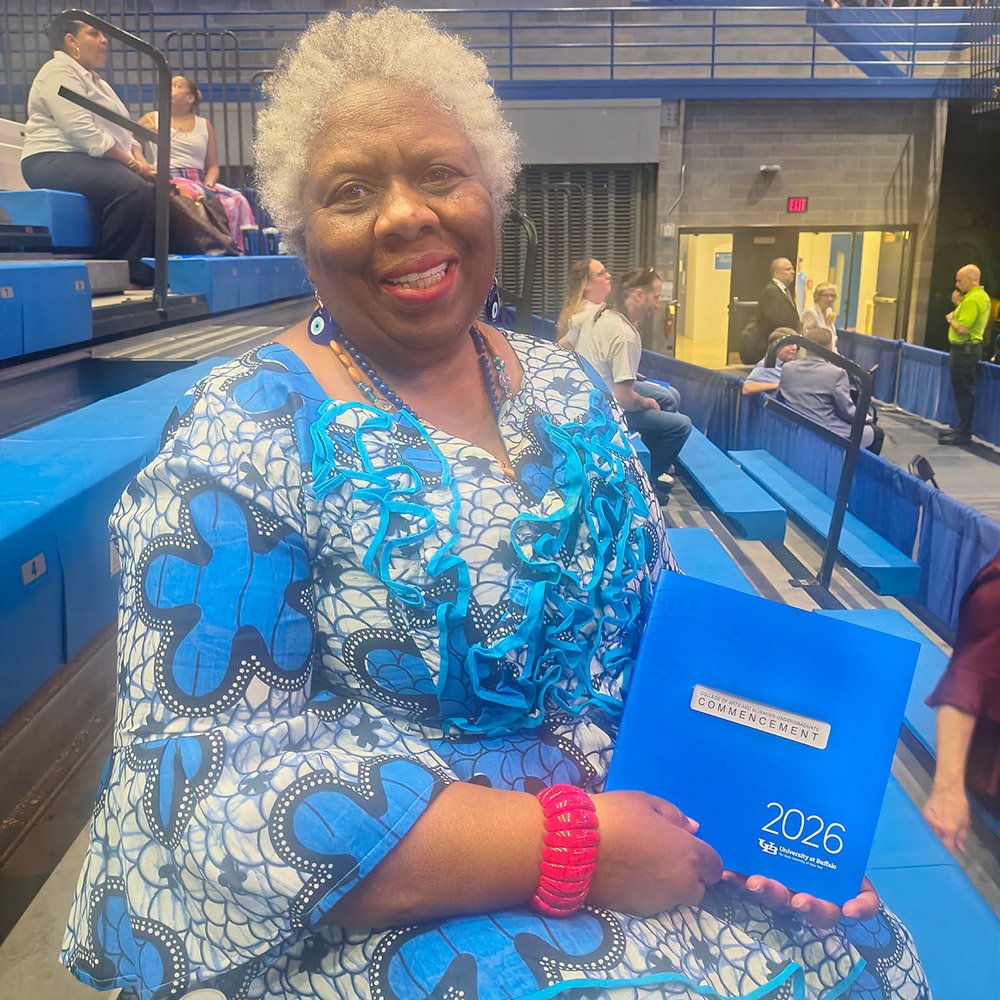
So I was fifty-five, and I was like, something has to be done about this. Because of advocacy, I learned in the Children's Aid Society too, because we had to fight for our rights sometimes. So I said, “You know what? I'm going to law school, and I'm going to do something about that.”. And that was the h entire reason at that point that I said I wrote my essay about the whole foster care system. I knew I was only going to go to one law school; that was CUNY Law because it's service of human needs. Haywood Burns was the second dean, and it was geared toward older students. So I sent my application a little late, maybe June, because at the point where I thought I'm going to do something, that's when I applied.
So they sent me back a letter and said, we're so sorry that we already have our class for this year; we cannot admit you. I sent them a letter right back. And I said, “No, this is the only law school I'm going to.”
Sarah Jonas (32:52)
Good for you.
Judy Edwards (32:53)
And I'm not giving up. I've been affiliated with this law school for years. I have a friend that's here. I'm not going anywhere else; I'm coming to CUNY. Someone reached out to me and said, “Well, we have this program. It's called Pipeline. It's called the Pipeline Program. And it's for people who have been out of school for years, who didn't get the required 152 on the LSAT.”. I said, I got a 152. I don't need that program. Yeah, I was offended. I'm like, I don't need that program. I don't need any Pipeline. So my daughter, who has much more common sense and wisdom than I ever will have, she said, “Jud, you have been out of school. You should take the Pipeline Program.”. And the Pipeline was a guarantee, because I'd already had the minimum score, that a year later I would go to law school. So I listened to her, and now I've learned to do more and more, and I said, okay, I'm going to go into the Pipeline Program. The best thing I ever could have done was to go into the Pipeline Program. I met wonderful young people, and because I was in the Pipeline Program, they got to know me, and I got a whole three-year scholarship. A Hayward Burns Fellowship to go to law school.
Sarah Jonas (34:21)
And I know that you talked earlier about kind of the experiences you had at the center and how you learned to step into your own leadership and believe in yourself. And I'm really hearing that even in this story.
Judy Edwards (34:34)
Exactly.
Sarah Jonas (34:35)
You didn't take no for an answer. You advocated for yourself. I mean, the work that you just said you talked about doing with families. You've been an advocate.
Judy Edwards (34:41)
And that's when I'm thinking about how that shaped me; it definitely did that. And it's not just me. I have friends who have gone to the center too. They were shaped similarly. We weren't the group of kids and young adults who said, “No, we can't do this.”. We were like, “No, we can do this.”. And I could hear my friend Libby in my head saying, “No, because Miss Dorman and Mr. Thing said we could do this and we could do that.”. And we could do it because we also went on a lot of competitive sports trips with the center where we ran races and we did relays and we jumped things and we did all of that. So it was a well-rounded education we got. It was physical, it was mental, it was…
Sarah Jonas (35:35)
Whole child. Well, I just want to really thank you. You've talked about how being at the center and the experiences you had led you to give back in so many ways. And you have. You've given back in countless ways to your to your community, obviously to your own children, but to so many others. And I just wanna thank you. I feel like you've given us a gift today by sharing your stories with us. So you've given back to us by sharing those experiences. And I want to thank you deeply for that.
Casper Lassite (36:01)
Miss Judy, thank you again for sharing your inspiring story with us. You've been an inspiration to me, and all the kind words you said about Milbank today mean a lot to me. And I'm going to definitely bring it back to my team. I love to give them great news when they're doing great things. So thank you again. And to our listeners, thank you for joining us. And remember to stay connected and follow future stories from every step of the way.
Sarah Jonas (36:28)
That was so good.