


By Drema Brown, Head of Schools, Children’s Aid College Prep Charter School, and Abe Fernandez, Director, National Center for Community Schools
When Chanel A. Ramírez was in elementary school, she arrived at her after-school program dressed as Cinderella for a Halloween celebration. There was just one problem: she had forgotten the sparkly jelly shoes that completed her costume.
Devastated, she locked herself in a bathroom and refused to come out. A staff member patiently talked to her through the door.
“Just wear the shoes you have,” she said.
“I can’t!” Chanel replied. “They’re Timberlands!”
The staff member paused and smiled.
“Then be Cinderella from the hood.”
Chanel emerged wearing her Timbs and spent the rest of the day proudly introducing herself as “Cinderella from the hood.” More than two decades later, she still remembers that moment—not because of the costume, but because of how seen she felt.
Today, Ramírez is a neuroscience researcher and Community Research Liaison studying dementia in underrepresented populations. She credits her experiences as a Children's Aid student, summer camper, and staff member with helping shape her understanding of what it means to support young people and communities.
Her story offers an important reminder at a moment when schools across the country are grappling with chronic absenteeism, student disengagement, mental health challenges, and widening opportunity gaps. A growing body of research suggests that community schools can address these challenges by creating conditions in which students feel connected, supported, and engaged. Educational success begins with human connection.
The most valuable thing a community school provides is not a program, service, or initiative. It is a platform for relationships. That may sound simple, but it has profound implications for how we think about improving schools and supporting young people.
Schools can do a great deal, but they cannot do everything alone. Students do not leave their challenges at the schoolhouse door. Housing instability, food insecurity, health concerns, caregiving responsibilities, transportation barriers, and family crises all influence a child's ability to learn. Yet too often, schools are expected to solve these challenges without the partnerships, resources, or infrastructure necessary to do so.
Community schools offer a different approach.
Rather than viewing education as something that happens solely inside a classroom, community schools recognize that student success is shaped by a broader ecosystem of support. This evidence-based approach brings together educators, families, health providers, community organizations, and other partners to coordinate the academic, social, health, and developmental supports students need to thrive.
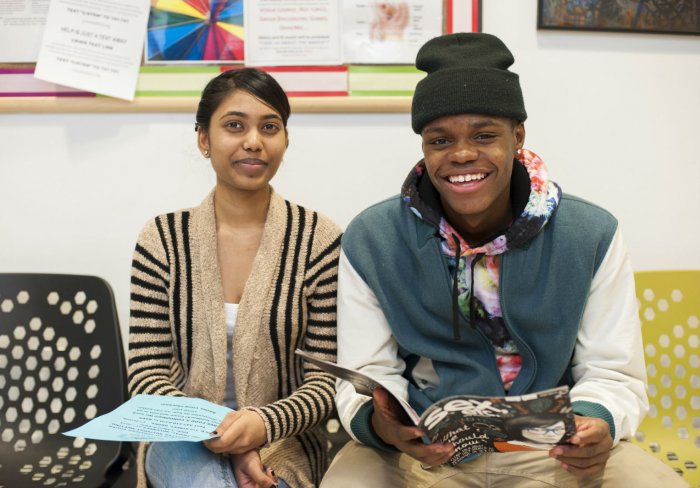
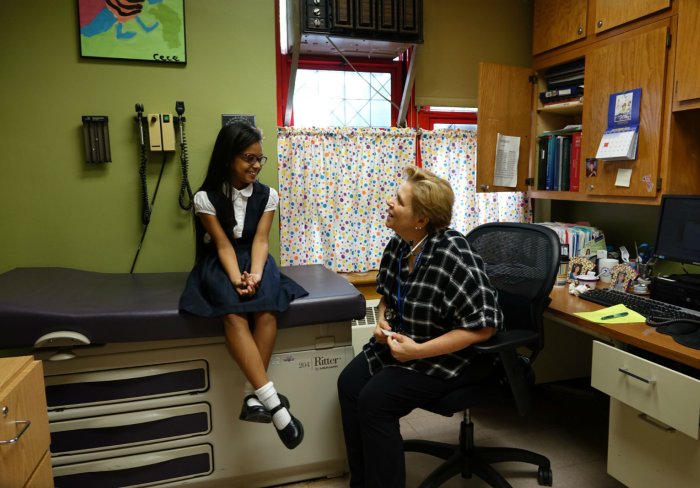
At Children's Aid, we have spent decades putting this philosophy into practice. Today, we operate 18 community schools in partnership with New York City Schools, as well as a community charter school serving elementary and middle school students in the Bronx. Across these sites, we provide academic enrichment, after-school programming, mental health services, health care access, family engagement opportunities, and other support designed to meet the unique needs of each school community.
But programs alone do not create transformation. People do.
What makes community schools powerful is the trust that develops when students and families know there are adults who care about them, understand their circumstances, and are committed to their success. Research on developmental relationships finds that young people are more likely to show academic growth, social-emotional growth, personal responsibility, and reduced engagement in high-risk behaviors when they experience strong, supportive relationships across their lives.
Chanel experienced that firsthand. As a child, Children's Aid programs gave her opportunities she might not otherwise have had. She attended after-school programs, participated in summer camp, learned to swim, rode horses at Children's Aid's Wagon Road Camp, and formed lasting relationships with staff members who encouraged her growth.
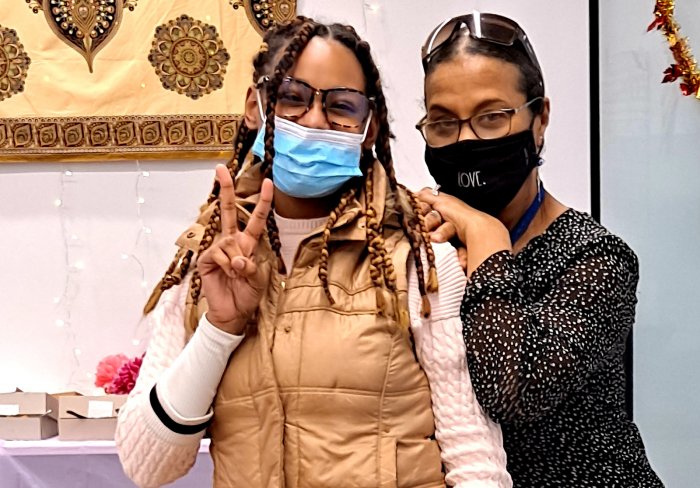
Years later, she returned as a staff member, working with children in after-school and summer programs. In that role, she began to see community schools from a different perspective.
As a student, after-school programs felt like fun. As an adult, she recognized something deeper.
She saw working parents rushing from jobs to pick up their children. She heard families express gratitude for safe, supportive environments where their children could learn and grow beyond the school day. She watched students develop academically, socially, and emotionally over the course of a school year.
Most importantly, she saw the power of relationships. That lesson continues to shape her work today.
As a researcher, Ramírez focuses on engaging historically underrepresented communities in scientific studies. She works to build trust, remove barriers to participation, and ensure that research reflects the experiences of the communities it seeks to serve.
The approach is remarkably similar to the work of community schools. Both begin by listening. Both recognize that meaningful engagement requires trust. And both understand that sustainable change happens when communities are treated as partners rather than recipients of services.
This emphasis on relationships is especially relevant today.
Across the country, educators and policymakers are searching for solutions to persistent challenges such as chronic absenteeism, mental health concerns, and declining student engagement. These issues are often discussed through the lens of data and outcomes—and data matters.
But data alone cannot explain why a student is missing school. Sometimes the reason is transportation. Sometimes it is housing instability. Sometimes a parent is managing a serious illness. Sometimes a student simply feels disconnected.
Community schools create the conditions to identify those challenges and respond to them holistically. By coordinating resources, integrating supports, and building strong relationships with students and families, they help address the barriers that can stand between a child and their education. A rigorous evaluation of New York City's Community Schools Initiative found positive effects on attendance among elementary and middle school students, as well as increases in standardized statewide assessments in math and English language arts by the third year of implementation. Importantly, this work is not limited to New York City. Through the National Center for Community Schools, Children's Aid has helped schools, districts, municipalities, and community organizations across the United States—and around the world—design, implement, and sustain community school strategies.
What makes this work distinctive is that we are both practitioners and capacity builders. We do not simply advise others on how community schools should operate. We run them ourselves every day.
The lessons we learn in our schools inform our training and technical assistance efforts. Likewise, the insights we gain from working with communities nationwide help strengthen our own practice. This continuous feedback loop allows us to adapt in real time and remain responsive to emerging needs.
At a moment when education leaders are searching for strategies that can meet the complex needs of today's students, community schools offer an evidence-based model grounded in a simple but powerful truth: young people succeed when they are surrounded by caring adults, strong partnerships, and communities that believe in their potential. Research on community school outcomes has linked well-implemented community school strategies to improvements in attendance, academic achievement, graduation rates, school climate, and disciplinary outcomes, while RAND’s evaluation of New York City’s Community Schools Initiative found measurable gains across several of those areas.
That truth is reflected in research, in attendance data, academic outcomes, and evidence that supportive relationships and coordinated systems of care help young people thrive. And sometimes, it is reflected in a memory.
A little girl in Timberlands who thought her Halloween costume was ruined. An adult who took a moment to make her feel seen. A future scientist who never forgot it.
The story may seem small. But that is often how transformation begins.
One relationship at a time.
Listen to Chanel’s story on “Every Step of the Way,” the official podcast of Children’s Aid.