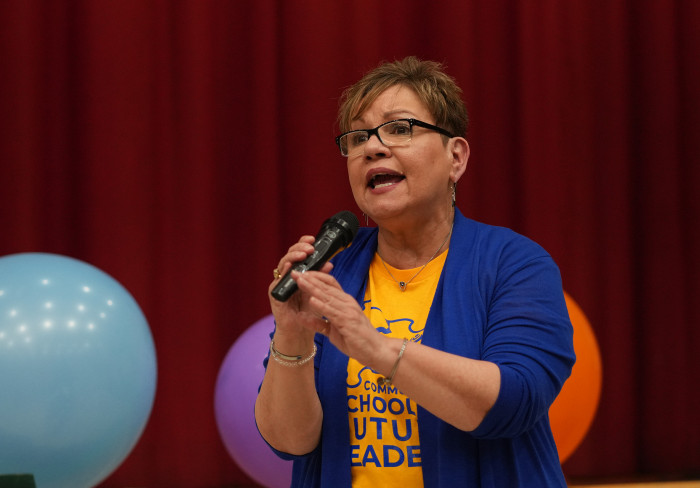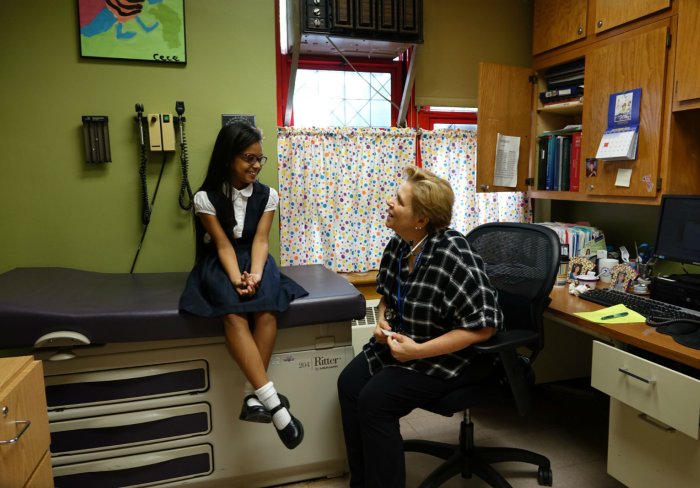




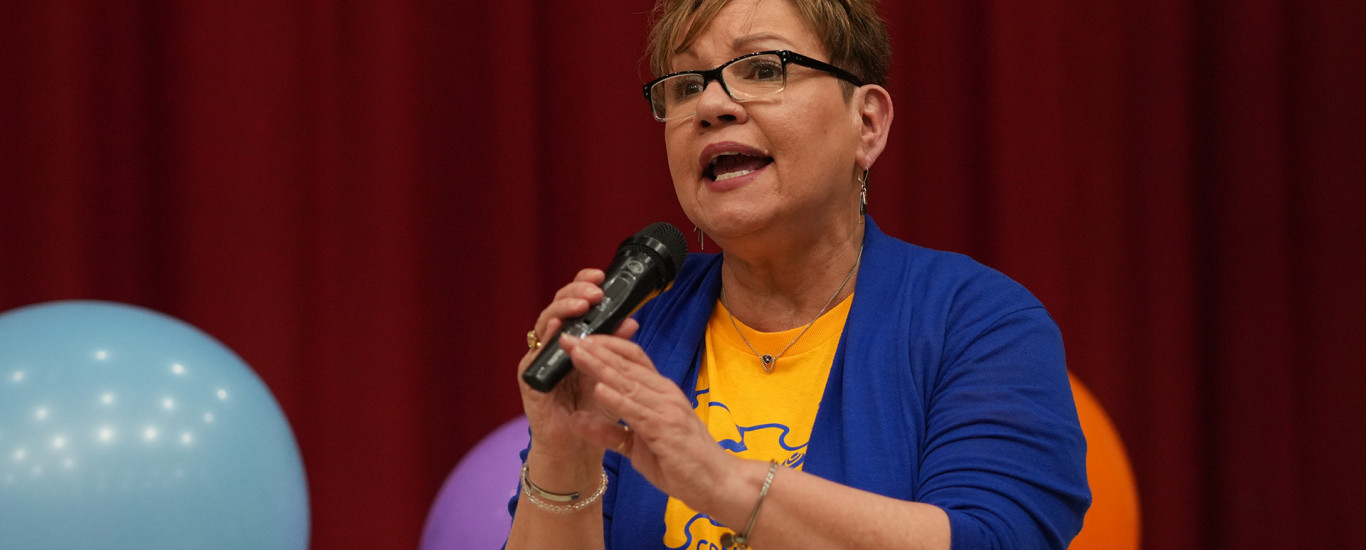
Families are often the first to know what children need to succeed. At the Salomé Ureña Campus in Washington Heights, Migdalia Cortes has built her work around making sure they are welcomed, heard, and supported.
For Migdalia, true family engagement begins with a simple but powerful idea: Parents are partners.
As community school director, Migdalia has spent 20 years helping parents build the confidence, skills, and connections to advocate for their children and their communities.
During Community School Coordinators Appreciation Week, Children’s Aid is highlighting leaders whose work brings the Community School Essentials Framework to life. Migdalia’s approach exemplifies one of its core practices: Powerful Student and Family Engagement.
Through the Ercilia Pepin Parent Leadership Institute and other initiatives across the campus, she has created opportunities for families to connect with resources, build relationships, develop leadership skills, and help shape their school community.
“You have to make parents feel welcome,” Migdalia said. “You have to build that trust.”
Where trust begins
That commitment is visible in the campus family room, which is designed to feel more like a living room than an office. Parents can sit comfortably, have coffee or tea, grab a snack, and talk openly with staff.
The relaxed environment helps families lower their guard and begin building relationships — particularly those who are new to the school or the country. For recently immigrated families, the campus can become a central point of connection, linking parents to school staff, community resources, adult education, healthcare, and other supports they may otherwise have to navigate alone.
Migdalia understands that building trust also requires humility. When she began her role two decades ago, she was candid with parents that she was still learning Spanish—and invited them to help her learn.
That vulnerability helped build mutual respect and relationships that have endured for years.
Listening first
The programs Migdalia and her team develop begin with listening. Each year, staff gather feedback through focus groups, surveys, and everyday conversations to understand what families need and how the campus can respond.
That input shapes workshops, classes, and activities throughout the year, with programming designed around parents’ interests and schedules.
Beginning in October, for example, families will participate in nutrition workshops offered with Cornell University, exploring how to prepare traditional criollo dishes with healthier ingredients while preserving the flavors and traditions that connect families to their culture.
Migdalia also leads social-emotional learning workshops on topics ranging from mindfulness and emotional intelligence to executive functioning, and parenting strategies.The curriculum is flexible so sessions can evolve as new needs emerge.
The same philosophy is guiding efforts to engage more fathers and father figures. On Sept. 17, the campus will host “Dads Take Your Child to School Day,” followed by activities and a focus group designed to learn directly from fathers about the programming and support they would find most useful.
The campus also serves more than 225 adults through English as a Second Language classes, offered in evening hours through a partner school, making participation more accessible to working adults.
“We have to meet parents where they are,” Migdalia said.
From participation to leadership
At Salomé Ureña, however, meeting parents where they are is only the beginning. Migdalia wants families to recognize the expertise they already possess — and to have opportunities to use their voices.
Parents are encouraged to join School Leadership Teams, take leadership roles during parent-teacher conferences, run for Parent Teacher Association positions, and participate in a Children’s Aid Parent Council that helps shape engagement efforts.
Those opportunities extend beyond the school building.
Each February, Children’s Aid helps prepare a group to travel to Albany and meet with elected officials about issues affecting children and families, including mental health services, after-school funding, and continued investment in community schools.
In the process, parents move from participating in programs to helping influence the policies and decisions that affect their children and communities.
The relationships parents build with one another are an important part of that growth. Families exchange advice and resources, support one another through challenges, and bring their own knowledge and expertise into the community—creating networks that extend beyond any individual workshop or event.
Keeping school a trusted place
That foundation of trust has become especially important as some families confront the fear and uncertainty around immigration enforcement, which can affect school attendance and participation in campus activities.
In response, the campus has worked with school leaders and city partners to share information about families’ rights, move workshops online when needed, and keep the school a secure and trusted place for families.
For Migdalia, maintaining that trust requires sustained partnership among school leaders, community organizations, and families — and a willingness to keep listening as circumstances change.
After 20 years, that remains at the center of how she approaches the work.
The welcoming family room, workshops, adult education classes, advocacy trips, and parent leadership opportunities all matter. But the foundation beneath them is trust.
During Community School Coordinators Appreciation Week, Migdalia’s work offers a powerful example of what these leaders make possible: When families are heard, respected, and welcomed as partners, engagement can become a pathway to leadership.